

If you or a loved one has been involved in a collision with a commercial vehicle, one of the most pressing questions you will face is: who is liable in a truck accident? Unlike standard car crashes where fault typically falls on one of the drivers, commercial trucking accidents are significantly more complex.
Trucking accidents often result in catastrophic injuries due to the sheer size and weight disparity between a semi-truck and a passenger vehicle. According to the National Highway Traffic Safety Administration (NHTSA), large truck crashes were responsible for 5,472 traffic fatalities in 2023. When navigating the aftermath of such a devastating event, understanding truck accident liability is crucial for securing the compensation you deserve. At Pencheff & Fraley Injury and Accident Attorneys, our experienced legal team is dedicated to helping victims across Ohio and Florida hold the responsible parties accountable.
Understanding Truck Accident Liability: Who is Responsible?
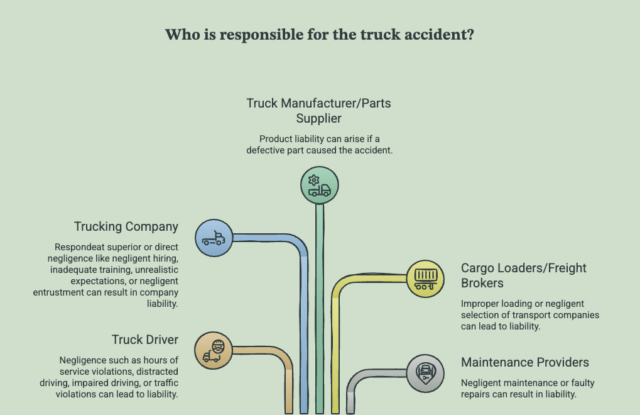
Determining who is at fault for a truck accident requires a thorough investigation. Because the commercial trucking industry involves multiple entities—from the driver behind the wheel to the corporation shipping the goods—there are several parties that may share responsibility for your injuries.
The Truck Driver
The most direct link to the collision is usually the truck driver. If a truck driver’s negligence caused the crash, they can be held personally liable. Common examples of driver negligence include:
- Hours of Service Violations: The Federal Motor Carrier Safety Administration (FMCSA) strictly regulates how long drivers can operate their vehicles. Drivers are limited to 11 hours of driving after 10 consecutive hours off duty. Fatigued driving due to violating these rules is a major cause of accidents.
- Distracted Driving: Using a mobile phone, eating, or using a dispatch device while driving.
- Impaired Driving: Operating a commercial vehicle under the influence of alcohol, prescription medications, or illicit drugs.
- Traffic Violations: Speeding, tailgating, or making illegal lane changes.
The Trucking Company
In many cases, the trucking company that employs the driver is also liable. This often falls under a legal doctrine known as respondeat superior, which holds employers responsible for the actions of their employees while they are performing job-related duties.
Furthermore, trucking company liability can arise from their own direct negligence. This includes:
- Negligent Hiring or Retention: Hiring drivers with a history of safety violations, DUIs, or failing to conduct proper background checks.
- Inadequate Training: Failing to ensure drivers are properly trained to handle large commercial vehicles.
- Unrealistic Expectations: Pressuring drivers to meet strict delivery deadlines, which encourages speeding and hours-of-service violations.
- Negligent Entrustment: Entrusting a commercial vehicle to an unqualified or dangerous driver.
If you have been injured, consulting with experienced truck accident lawyers is essential to investigate the company’s practices.
The Truck Manufacturer or Parts Supplier
Sometimes, an accident is not caused by human error but by a mechanical failure. If a defective part—such as faulty brakes, a blown tire, or a malfunctioning steering system—caused the crash, the manufacturer of the truck or the specific component may be held liable under product liability laws.
Cargo Loaders and Freight Brokers
Properly loading and securing cargo is critical for a semi-truck’s stability. If cargo is overloaded, unevenly distributed, or improperly secured, it can cause the truck to become unbalanced, leading to a rollover or a jackknife accident. In these instances, the third-party company responsible for loading the freight may be liable.
Additionally, a 2026 U.S. Supreme Court ruling clarified that freight brokers—the middlemen who arrange transportation between shippers and trucking companies—can also face liability if they were negligent in selecting an unsafe transport company.
Maintenance Providers
Trucking companies rely on mechanics and third-party maintenance providers to keep their fleets safe. If a maintenance provider fails to identify a critical issue, performs a faulty repair, or neglects routine maintenance, they can be held responsible for an accident resulting from equipment failure.
The Complexity of Proving Liability in a Trucking Accident
Proving who is liable in a truck accident is rarely straightforward. The trucking company and their insurance providers will deploy teams of investigators and high-priced attorneys immediately after a crash to minimize their financial exposure. They may attempt to shift the blame onto you or argue that the driver was an independent contractor to avoid respondeat superior liability.
To build a strong case, extensive evidence must be gathered, including:
- Electronic Logging Devices (ELDs): To verify if the driver violated FMCSA hours-of-service regulations.
- Truck “Black Box” Data: Event data recorders provide critical information about the truck’s speed, braking, and steering just before the impact.
- Maintenance and Inspection Records: To identify any history of mechanical neglect.
- Driver Qualification Files: To uncover negligent hiring practices.
- Police Reports and Witness Statements: Essential documentation from the scene of the accident.
Because this evidence can be quickly “lost” or destroyed, it is vital to contact a personal injury attorney immediately to issue a spoliation letter, legally requiring the trucking company to preserve all relevant evidence.
What Compensation Can You Recover?
The physical, emotional, and financial toll of a truck accident can be overwhelming. Victims often face extensive medical treatments, long-term rehabilitation, and an inability to return to work. By identifying all liable parties, you can pursue maximum compensation for your damages.
Potential compensation in a truck accident claim includes:
- Economic Damages: Past and future medical expenses, lost wages, loss of earning capacity, and property damage.
- Non-Economic Damages: Pain and suffering, emotional distress, loss of enjoyment of life, and scarring or disfigurement.
- Wrongful Death: If a loved one was tragically killed, surviving family members may pursue a wrongful death claim for funeral expenses, loss of companionship, and lost financial support.
Whether you were involved in a collision with a commercial truck, a standard car accident, or a motorcycle accident, securing experienced legal representation is your best defense against aggressive insurance companies.
Frequently Asked Questions
Who is liable if a truck driver is an independent contractor?
If the driver is a true independent contractor who owns their truck and pays for their own insurance, they may be solely liable. However, trucking companies often misclassify employees as independent contractors to avoid liability. An attorney can investigate the relationship to determine the company’s level of control over the driver; if they control the routes and schedules, the company may still be held liable.
Can more than one party be at fault for my truck accident?
Yes. It is very common for multiple parties to share liability in a truck accident. For example, the driver may be at fault for speeding, while the trucking company is simultaneously liable for negligent hiring and failing to maintain the vehicle’s brakes.
How long do I have to file a truck accident lawsuit?
The statute of limitations varies by state. In Ohio and Florida, you generally have a limited window of time from the date of the accident to file a personal injury lawsuit. It is crucial to consult a lawyer promptly to ensure you do not miss these critical deadlines. For more information, visit our Personal Injury FAQs.
Contact Pencheff & Fraley for a Free Case Evaluation
Determining who is liable in a truck accident requires aggressive investigation and deep legal expertise. You do not have to face the trucking companies and their insurers alone. At Pencheff & Fraley Injury and Accident Attorneys, we operate on a contingency fee basis—meaning you pay no upfront fees, and we only get paid if we win your case.
If you have been injured in Ohio or Florida, contact us today for a free, confidential consultation. Let our experienced trial lawyers fight to secure the justice and compensation you deserve.