

A sudden fall can change your life in seconds. You might face mounting medical bills, lost wages, and severe pain. If you were injured on someone else’s property, you might wonder about your legal options. What is considered negligence in a slip and fall case? This is the most critical question to answer when seeking compensation.
Property owners must keep their premises safe. When they fail to do so, they can be held liable for your injuries. However, proving fault is not always easy. Insurance companies will often try to blame you for the accident. You need strong evidence to build a winning claim.
In this comprehensive guide, our personal injury attorneys at Pencheff and Fraley explain how negligence works. We will cover the legal elements you must prove, state-specific laws, and how to protect your rights.
Understanding Premises Liability and Duty of Care
Slip and fall cases fall under a legal concept called premises liability. This area of law holds property owners responsible for injuries that occur on their land. However, simply falling on someone’s property does not automatically mean they are negligent.
You must prove that the owner failed to maintain a safe environment. This failure must directly cause your injury. Courts use specific standards to determine if an owner acted responsibly.
The Reasonable Person Standard
The law measures negligence using the “reasonable person” standard. This asks a simple question: Would a reasonable property owner have identified and fixed the hazard?
For example, if a grocery store roof leaks during a storm, a reasonable manager would place warning signs. They would also mop the floor promptly. If the staff ignores the puddle for hours, they are likely negligent.
Types of Visitors and Legal Duties
The level of care an owner owes you depends on your visitor status. There are three main categories of visitors:
- Invitees: These are customers at a business. Owners owe them the highest duty of care. They must actively inspect for hazards and fix them.
- Licensees: These are social guests at a private home. Owners must warn them of known dangers.
- Trespassers: These are unauthorized visitors. Owners generally owe them no duty of care, except to avoid intentionally harming them.
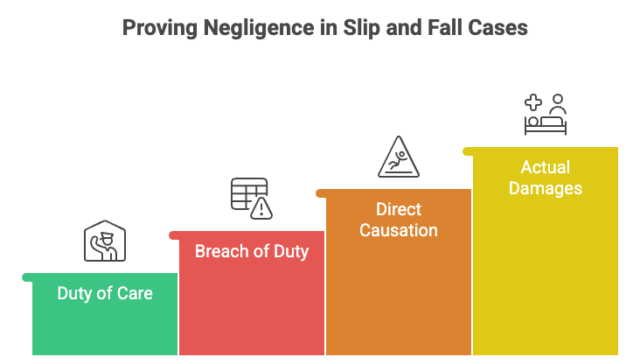
The Four Elements of Negligence
To win your case, you must establish four specific legal elements. Missing even one element will cause your claim to fail. Here is how you prove negligence in slip and fall incidents.
1. Duty of Care
First, you must show that the defendant owed you a duty of care. If you were shopping at a retail store, the business clearly owed you a safe environment. The same applies to apartment landlords and government buildings.
2. Breach of Duty
Second, you must prove the owner breached their duty. This means they knew, or should have known, about the hazard but did nothing. Evidence like maintenance logs, security video, and employee testimony can prove this breach.
3. Direct Causation
Third, you must link the breach directly to your accident. The hazard must be the actual cause of your fall. If you tripped over your own shoelaces near a wet floor, the owner is not liable.
4. Actual Damages
Finally, you must prove you suffered actual harm. This includes physical injuries, medical expenses, and lost income. Without measurable damages, you do not have a valid claim.
Common Examples of Property Owner Negligence
Negligence can take many forms. According to the Centers for Disease Control and Prevention (CDC), falls are a leading cause of preventable injuries. Here are the most frequent hazards that lead to lawsuits.
Wet Floors and Spills
Spills in grocery stores and restaurants are incredibly common. If employees fail to clean a spill or place a “Wet Floor” sign, the business is negligent. Freshly mopped or waxed floors also require clear warnings.
Broken Stairs and Poor Lighting
Structural defects pose severe risks. Missing handrails, uneven steps, and torn carpets frequently cause falls. This is especially true for elevator and escalator accidents. Furthermore, poor lighting in stairwells or parking lots hides these dangers from visitors.
Weather-Related Hazards
Property owners must manage snow and ice. While they cannot control the weather, they must clear walkways within a reasonable time. Failing to salt an icy sidewalk can lead to liability if a visitor slips.
How State Laws Affect Your Claim
Pencheff and Fraley proudly serve clients in both Ohio and Florida. It is crucial to understand that slip and fall laws vary significantly between these two states.
Ohio Slip and Fall Laws
In Ohio, the law heavily favors the “open and obvious” doctrine. If a hazard is clearly visible, the property owner might not be liable. The court assumes you should have seen the danger and avoided it.
If you are wondering how to start a personal injury claim in Ohio, you must gather evidence quickly. You need to prove the hazard was hidden or unavoidable.
Florida Slip and Fall Laws
Florida has specific rules for business establishments. Under Florida Statute 768.0755, if you slip on a “transitory foreign substance” (like a spilled drink), you carry a heavy burden. You must prove the business had actual or constructive knowledge of the spill.
This means you must show the spill was there long enough that staff should have noticed it. Security footage is vital for these cases.
Overcoming Insurance Company Defenses
Insurance adjusters will fight hard to deny your claim. They want to protect their profits, not pay for your recovery. You must be prepared for their common defense strategies.
The Open and Obvious Doctrine
As mentioned, defendants will argue the hazard was obvious. They will claim you were not paying attention. To beat this, your lawyer might argue the lighting was poor. They might also show that a store display distracted you, which is common in retail settings.
Comparative Negligence Rules
Both Ohio and Florida use comparative negligence rules. This means the court can assign a percentage of blame to you. If you were texting while walking, the court might say you are 20% at fault.
Your final payout will be reduced by your percentage of fault. A skilled attorney will fight to minimize your share of the blame and maximize your settlement.
Frequently Asked Questions (FAQ)
How long do I have to file a slip and fall claim?
You must follow strict injury claim deadlines. In Ohio, you generally have two years from the date of the accident to file a lawsuit. Florida also enforces a two-year statute of limitations for general negligence claims. Missing this deadline means losing your right to sue.
What if I was partially at fault for my fall?
You can still recover damages even if you share some blame. However, your compensation will be reduced. In Ohio, you cannot recover anything if you are more than 50% at fault. Florida follows a modified comparative negligence rule, which also bars recovery if you are more than 50% responsible.
How much is a slip and fall case worth?
Every case is unique. The value depends on the severity of your injuries and your financial losses. Minor injuries might settle for a few thousand dollars. However, catastrophic injuries, like a traumatic brain injury (TBI), can result in massive settlements. Review our case results to see how we have helped past clients.
Get Help From an Experienced Personal Injury Attorney
Proving negligence requires skill, resources, and aggressive legal action. Do not let an insurance company bully you into accepting a lowball offer. You deserve full compensation for your pain and suffering.
At Pencheff and Fraley, we have a proven track record of winning complex premises liability cases. We know how to investigate accidents, secure vital evidence, and hold negligent property owners accountable.
If you or a loved one has been injured, we are here to help. We serve clients throughout all of Ohio and Florida. We offer zero upfront fees and personalized attention for every client.
Contact us today for a free, no-obligation consultation. We will review your case, answer your questions, and explain your legal options. Learn how we can help you on the road to recovery. Pay nothing unless we win your case.
Call us at 904-770-4953 or visit our website at www.pencheffandfraley.com to schedule your free case consultation.
We’re Here for You 24/7
We are available 24/7 to take your call. If you are unable to travel, we will come to you. The sooner you call, the stronger your case can be. Your path to maximum compensation and justice starts with a single phone call to Pencheff & Fraley.
Author: Pencheff and Fraley Legal Team
Disclaimer: This article is for informational purposes only and does not constitute legal advice. Every case is unique, and you should consult with a qualified attorney about your specific situation.