

After a Mansfield Ohio motorcycle accident, move away from traffic if you can do so safely, call 911 when anyone is hurt or the roadway is dangerous, and accept emergency care. Exchange information only when safe. Photograph the scene, preserve your helmet and gear, and report the crash. Keep medical and insurance records, and understand any release before signing it.
What to Do After a Mansfield Ohio Motorcycle Accident
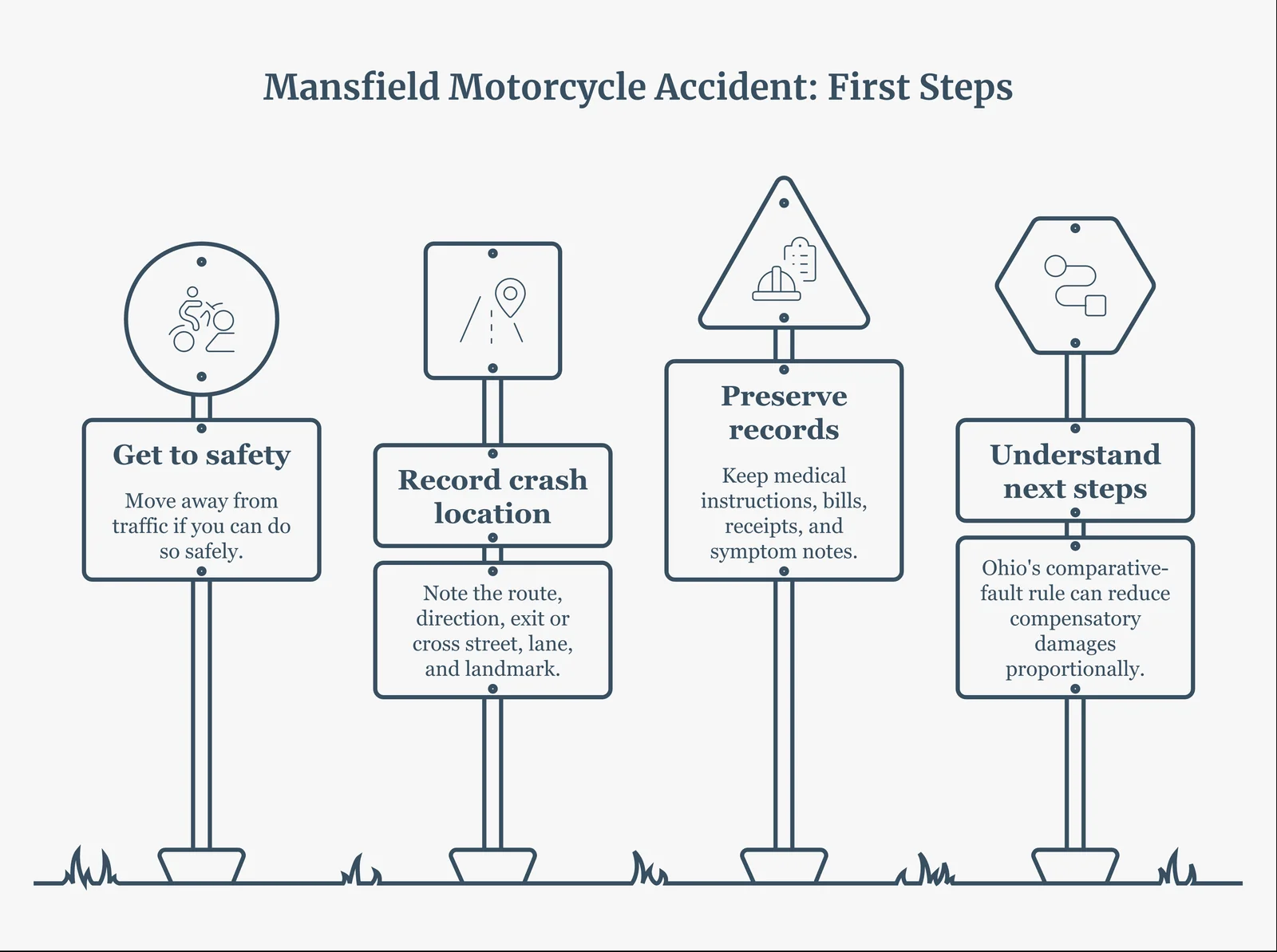
The first minutes can be confusing. Focus on immediate safety and accurate information. Do not put yourself in moving traffic to take photos or retrieve belongings.
1. Get to a safe place and request help
If you can move without worsening an injury, get clear of traffic. Call 911 if anyone may be hurt, a vehicle is blocking a lane, or another hazard needs emergency attention. Give the dispatcher the road name, nearest cross street or exit, and direction of travel. Follow instructions from responders.
Do not assume that pain will appear immediately. If you feel unwell, tell the dispatcher or a medical professional. If another person is seriously injured, avoid moving them unless there is immediate danger. Let emergency responders assess the situation.
2. Exchange information when it is safe
If you are able, collect the other driver’s name, contact details, license plate, insurer, and policy information. Ask witnesses for their names and preferred contact method. Note the responding agency and any incident or report number.
Keep the conversation factual. Do not guess about speed, distance, or fault. A calm description of what you personally observed is more useful than speculation.
3. Record the scene without creating another risk
From a safe place, photograph the vehicles, motorcycle, visible damage, road surface, lane markings, traffic signs, signals, and surrounding area. Record the time, weather, direction of travel, and nearest address or landmark. If a camera or business is nearby, note its location; footage may not be kept indefinitely.
Save the original images and videos. Avoid editing or posting them before you have made a secure copy. If pain or shock prevents documentation, ask a trusted person to help later.
Mansfield Crash Locations and Police Reports
After an Ohio motorcycle accident in Mansfield, a street name alone may not identify the exact place of the crash. Mansfield sits near Interstate 71, U.S. Route 30, and State Route 13, according to the City of Mansfield’s route information. Record the route, direction, exit or cross street, lane, and a nearby landmark. This is useful whether a collision happened on a highway approach or a city street.
Capture the exact location
On a highway approach
Note the route and travel direction, exit or ramp, mile marker if visible, closest cross street, lane, and construction. Avoid approaching traffic to check a sign.
On a Mansfield street
Write down the nearest address or cross street, your approach direction, lane, and a nearby business or signal.
Identify the agency that responded
The City of Mansfield lists a Division of Police and a city 911 communications center. Which agency investigates depends on the crash location and response. Use the report number or dispatch details to confirm the investigating agency rather than assuming a report is held by one particular office.
How to obtain an Ohio crash report
The Ohio Department of Public Safety says reports may take up to six weeks to appear in its Crash Report Search. The department also states that reports on the search site are not official documents. If you need an official copy, request it from the agency that investigated the crash. If nothing appears online, contact that agency directly.
A crash report can help organize facts, but it may not include every witness, image, or later medical finding. Keep your own records and correct factual errors through the appropriate agency process.
Get Medical Care and Preserve Motorcycle Evidence
A motorcycle crash can cause injuries that are not obvious at the scene. A medical assessment creates a record of what you reported and what providers observed. Follow the care plan you receive, and keep copies of discharge instructions, referrals, prescriptions, and appointment details.
Keep a clear record of symptoms and expenses
Write down when symptoms began, what activities are difficult, and how they change. Save bills, receipts, mileage records, time missed from work, and insurance correspondence. Ask your providers questions about care; do not rely on an insurer to interpret medical records for you.
Preserve the motorcycle, helmet, and riding gear
Before repairing, replacing, or discarding damaged property, take clear photographs and ask the insurer how it wants an inspection handled. Keep the helmet, jacket, gloves, and other gear in a safe place. Do not clean or alter damaged items before documenting them.
Ohio’s motorcycle operation statute sets out helmet and eye-protection requirements for specified riders and situations. The details depend on the rider’s circumstances. For a broader explanation, see the firm’s Ohio helmet-law guide; this local article does not replace it.
Handle Insurance Communications Carefully
Notify your insurer promptly and follow the policy’s reporting instructions. Keep the date, time, and name for each call. Give accurate facts, and say when you do not know an answer. Do not speculate or minimize an injury that has not yet been evaluated.
An adjuster may ask for a recorded statement, broad medical authorization, or settlement paperwork. You can ask what the request covers and take time to understand it. A signed release can affect later claims, so consider getting legal advice before accepting a final payment or signing documents you do not understand.
Keep letters, emails, claim numbers, estimates, and receipts together. If a vehicle, motorcycle, or medical bill is involved, ask the insurer to explain in writing what it has reviewed and what remains outstanding. Coverage depends on the policy and facts; do not assume a particular benefit applies without checking.
How Ohio Fault and Deadlines Can Affect a Mansfield Claim
A police report or traffic citation is not the same as a final decision on civil responsibility. Photos, witness accounts, vehicle damage, medical records, and road conditions may all matter. Preserve evidence before memories fade or physical conditions change.
Shared fault is decided under Ohio law
Ohio’s comparative-fault statute says a person’s contributory fault does not automatically bar recovery. It provides for a proportional reduction in compensatory damages and bars recovery when the person’s fault is greater than the combined fault of the other persons described in the statute. How the rule applies depends on the evidence and the parties involved.
Ask promptly about the filing deadline
Ohio Revised Code Section 2305.10 generally sets a two-year period for bodily-injury actions, subject to statutory exceptions and rules about when a claim accrues. This is not a calculation of any reader’s deadline. The type of claim, parties, and facts can change the analysis, so get advice promptly rather than waiting for insurance talks to end.
For statewide motorcycle-claim information, see the firm’s Ohio motorcycle accident guide. This page focuses on practical steps and local reporting after a crash in or near Mansfield.
When a Mansfield Motorcycle Accident Lawyer May Help
A Mansfield motorcycle accident lawyer can review the crash location, available reports, witness information, photographs, medical documentation, and insurer communications. Local detail matters: the record should identify where the crash occurred and which agency responded, not simply say “near Mansfield.”
A lawyer can also assess what evidence may still be preserved and explain how Ohio’s fault and deadline rules may apply to the specific facts. The firm’s motorcycle accident practice page describes its broader motorcycle-claim services. Choosing whether to speak with counsel is your decision; an initial conversation can help you understand what information may be useful.
Frequently Asked Questions
What should I do first after a motorcycle accident in Mansfield, Ohio?
Move to safety if you can, call 911 when someone is hurt or the roadway is dangerous, and accept medical care. Exchange information only when safe, record the exact location, and preserve photographs and documents.
How do I get a Mansfield motorcycle crash report?
First identify which agency investigated the crash and keep the report number. Ohio’s online Crash Report Search can take up to six weeks to show a report, and the state says online copies are not official. Request an official copy from the investigating agency.
Should I keep my motorcycle helmet and damaged gear?
Yes. Photograph the helmet and gear, then keep them in a safe place without cleaning or altering them. Ask the insurer how it wants the motorcycle inspected before arranging repairs or disposing of property.
What if an insurer asks me for a recorded statement or release?
Ask what the request covers and take time to understand it. Give accurate information, avoid guessing, and consider legal advice before signing a release or accepting a final settlement.
How long do I have to bring an Ohio motorcycle injury claim?
Ohio law generally provides a two-year period for bodily-injury actions, but statutory exceptions and claim-specific facts may affect the deadline. Ask a qualified Ohio attorney to review the timing promptly.
Talk With Pencheff & Fraley About a Mansfield Crash
Pencheff & Fraley’s Mansfield office serves people in Mansfield and the surrounding area. If you want to discuss a motorcycle crash, call 614-931-0011 or use the firm’s contact page. You can share what happened and ask what records may help evaluate your next steps. There is no pressure to make a decision during that conversation.
This article is intended for general informational purposes only and does not constitute legal advice. Laws change, and the information above may not reflect the most recent legal developments. Please contact the Pencheff & Fraley team to discuss the specific facts of your case.
Contacting us does not create an attorney-client relationship.
Written by the Pencheff & Fraley Editorial Team.