
Catastrophic Truck Accident Injuries in Ohio: A Comprehensive Guide
Every year on Ohio’s roads, thousands of lives are irrevocably altered by collisions with large commercial trucks. While any motor vehicle accident can be serious, those involving 80,000-pound semi-trucks often result in devastating, life-altering harm. If you or a loved one is facing the aftermath of such an event, you are likely dealing with immense physical pain, emotional trauma, and overwhelming financial pressure. Understanding your legal rights and the path to recovery is the first step toward rebuilding your future. This guide provides a comprehensive overview of Catastrophic Truck Accident Injuries in Ohio, offering the crucial information you need during this difficult time.
At Pencheff & Fraley, we have seen firsthand the profound impact these accidents have on victims and their families. We are dedicated to providing not only expert legal representation but also compassionate support, helping you navigate the complex road ahead and secure the justice and financial stability you deserve.
The Alarming Reality: Ohio Truck Accident Statistics
To fully grasp the severity of the issue, it is essential to look at the data. Recent statistics paint a grim picture of the dangers posed by large commercial vehicles on Ohio’s highways. These are not just numbers; they represent families torn apart and futures thrown into uncertainty.
According to the Ohio State Highway Patrol and the Federal Motor Carrier Safety Administration, the trend of severe truck accidents is a significant concern. In 2023, Ohio recorded 5,374 crashes involving semi-trucks, which resulted in 145 fatalities and 2,258 non-fatal injuries. Preliminary data for 2024 suggests this destructive trend continued, with increases in crashes, injuries, and fatalities, underscoring the persistent risk on our roads.
| Year | Total Semi-Truck Crashes | Fatalities | Non-Fatal Injuries |
| 2023 | 5,374 | 145 | 2,258 |
| 2024 | Figures trending higher than 2023 | >145 | >2,258 |
This problem is particularly acute in Ohio, which consistently ranks among the top states in the nation for fatal truck accidents. In 2021, the state ranked fifth in the U.S. for truck wreck fatalities, with over 200 deaths recorded. High-traffic corridors like I-70, I-75, I-71, and I-90, especially around major metropolitan areas such as Columbus, Cleveland, and Cincinnati, are frequent sites of these tragic events. Commercial vehicles account for more than 10% of all traffic-related deaths statewide, a disproportionately high figure that highlights the immense danger they pose to passenger vehicles.
What Legally Defines a “Catastrophic Injury” in an Ohio Truck Accident?
While many injuries can be serious, the legal and medical communities reserve the term “catastrophic injury” for the most severe forms of harm. In the context of an Ohio truck accident claim, an injury is considered catastrophic if it results in permanent disability, significant disfigurement, or a long-term medical condition that prevents the victim from performing meaningful work or engaging in normal daily activities.
This distinction is critically important. A catastrophic injury diagnosis fundamentally changes the scope of a personal injury claim. It shifts the focus from short-term recovery to lifelong care. Consequently, the compensation required must account for decades of future medical treatment, lost earning capacity, permanent lifestyle modifications, and enduring pain and suffering. Securing this level of compensation is a complex legal challenge that requires deep expertise in truck accident litigation.
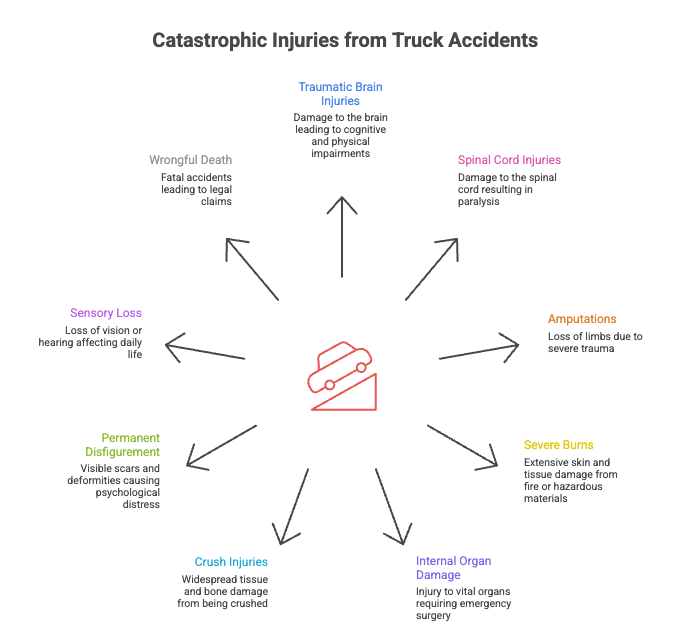
Common Types of Catastrophic Injuries from Ohio Truck Accidents
The immense force generated in a collision between a commercial truck and a smaller vehicle can cause a wide range of catastrophic injuries. Below is a comprehensive overview of the most severe types of harm victims often sustain.
Traumatic Brain Injuries (TBI)
A TBI occurs when a sudden, violent blow or jolt to the head damages the brain. In a high-impact truck crash, this can happen from the head striking the steering wheel, window, or other objects, or simply from the violent acceleration-deceleration forces. TBIs range from seemingly mild concussions to severe injuries that cause permanent cognitive, physical, and emotional impairments. Long-term effects can include memory loss, personality changes, motor function deficits, and an inability to live independently. According to the Rand Corporation, the lifetime cost of treating a severe TBI can range from $85,000 to over $3 million.
Spinal Cord Injuries & Paralysis
The same forces that cause TBIs can also sever, crush, or damage the spinal cord. The spinal cord does not have the ability to heal itself, meaning damage is almost always permanent. Depending on the location and severity of the injury, the result can be partial or complete paralysis.
- Paraplegia: Paralysis affecting the lower half of the body.
- Quadriplegia (Tetraplegia): Paralysis affecting the body from the neck down.
A spinal cord injury requires a lifetime of medical care, including mobility equipment, home modifications, and personal assistance. The Christopher & Dana Reeve Foundation estimates that the lifetime costs for a person with high tetraplegia can exceed $5 million.
Amputations & Loss of Limb
Crush forces in a truck accident can damage a limb so severely that it cannot be saved, requiring surgical amputation. In other cases, a limb may be traumatically amputated during the crash itself. The loss of an arm, leg, hand, or foot is a life-altering event that requires extensive physical and psychological rehabilitation, advanced prosthetics, and adaptations to every aspect of daily life.
Severe Burns
Truck accidents can result in fires or the spillage of hazardous materials, leading to severe thermal, chemical, or electrical burns. Third- and fourth-degree burns destroy skin layers and underlying tissue, requiring painful skin grafts, multiple surgeries, and extensive therapy to manage scarring and contractures. These injuries carry a high risk of infection and often result in permanent, prominent disfigurement.
Internal Organ Damage
The blunt force trauma from a truck accident can cause significant damage to vital internal organs, such as the liver, kidneys, spleen, lungs, or heart. Internal bleeding is a life-threatening emergency that may not be immediately apparent at the accident scene. Victims often require emergency surgery and may suffer from long-term organ dysfunction.
Crush Injuries & Multiple Bone Fractures
When a victim is pinned inside their vehicle or crushed under the weight of a truck, they can suffer widespread crush injuries. This can lead to compartment syndrome, a dangerous condition where swelling cuts off blood flow, causing muscle and nerve death. These accidents also frequently cause multiple complex bone fractures, often requiring surgical insertion of plates, screws, and rods to stabilize the bones.
Permanent Disfigurement & Scarring
Severe lacerations from broken glass and twisted metal, as well as surgical scars and skin grafts from burns, can leave a victim with permanent disfigurement. These visible reminders of the trauma can cause significant psychological distress, including depression, anxiety, and social withdrawal.
Vision or Hearing Loss
Head trauma or direct injury to the eyes or ears can result in partial or complete loss of vision or hearing. These sensory losses dramatically impact a person’s ability to work, communicate, and navigate the world safely.
Wrongful Death
Tragically, many catastrophic truck accidents are fatal. When a person dies as a result of another party’s negligence, their surviving family members have the right to file a wrongful death claim to seek justice and compensation for their immense loss.
Identifying All Liable Parties: Who Can Be Held Responsible?
One of the most significant mistakes in a truck accident case is assuming the driver is the only responsible party. In reality, a thorough investigation often reveals a chain of negligence involving multiple entities. Identifying and pursuing claims against all liable parties is crucial for securing the full compensation necessary for a lifetime of care.
The Negligent Truck Driver
Driver error is a factor in a vast number of truck accidents. This can include speeding, distracted driving, driving under the influence of drugs or alcohol, or violating federal safety regulations.
The Trucking Company (Motor Carrier)
Under a legal doctrine known as vicarious liability, employers are generally responsible for the negligent acts of their employees. Furthermore, a trucking company can be held directly liable for its own negligence, such as:
- Negligent Hiring: Hiring drivers with a history of accidents or substance abuse.
- Inadequate Training: Failing to properly train drivers on safety procedures and vehicle operation.
- Pressuring Drivers: Encouraging or forcing drivers to violate Hours of Service rules to meet deadlines.
- Poor Maintenance: Failing to properly inspect and maintain their fleet of vehicles.
Vehicle or Parts Manufacturers
If a defective truck part, such as faulty brakes, a defective tire, or a flawed steering component, contributed to the crash, the manufacturer of that part can be held liable under product liability laws.
Cargo Loading Companies
Improperly loaded or secured cargo can shift during transit, causing the driver to lose control or the truck to roll over. The company responsible for loading the trailer can be held liable for this negligence.
Maintenance and Repair Shops
If a third-party mechanic or repair shop performed faulty maintenance on the truck, leading to a mechanical failure that caused the accident, that shop can be held responsible for its negligent work.
Proving Negligence: Common Causes of Catastrophic Truck Accidents
Successfully recovering compensation hinges on proving that one or more parties acted negligently and that their negligence caused the accident and resulting injuries. A deep investigation often uncovers clear evidence of wrongdoing, frequently tied to violations of federal and state safety laws.
Violations of Federal Trucking Regulations (FMCSA)
The Federal Motor Carrier Safety Administration sets strict rules for the trucking industry. Violations are common causes of catastrophic accidents and provide powerful evidence of negligence.
The Hours of Service (HOS) rules are among the most frequently violated regulations. To combat driver fatigue, the FMCSA limits property-carrying drivers to 11 hours of driving within a 14-hour on-duty window, after which they must take 10 consecutive hours off duty. Electronic Logging Devices (ELDs) are mandated to track this, but some drivers and companies still find ways to falsify records or push the limits, leading to drowsy driving and delayed reaction times.
Other common violations include failure to conduct mandatory drug and alcohol testing, using unqualified drivers, and operating a vehicle with known mechanical defects.
Distracted, Impaired, or Reckless Driving
Despite strict regulations, truck drivers are not immune to dangerous behaviors. Using a cell phone, eating, or adjusting in-cab equipment constitutes distracted driving. Driving under the influence of alcohol, illegal drugs, or even certain prescription medications can severely impair judgment and reaction time. Aggressive driving, such as speeding, tailgating, and unsafe lane changes, is especially dangerous in a large commercial truck.
Improper Cargo Loading & Securement
An unbalanced or overloaded truck is a significant safety hazard. If cargo is not properly distributed and secured, it can cause the truck to become unstable, leading to rollovers or jackknife accidents. The FMCSA has detailed regulations regarding cargo securement that, when violated, serve as strong evidence of negligence.
Poor Vehicle Maintenance & Equipment Failure
Trucking companies are required to have systematic inspection, repair, and maintenance programs. Brake failure, tire blowouts, and steering or suspension failures are common results of neglected maintenance. A post-accident inspection of the vehicle and a review of maintenance records can reveal a pattern of cutting corners on safety.
Maximizing Your Financial Recovery: Compensation for Catastrophic Injuries
The goal of a catastrophic injury claim is to secure a financial recovery that covers not only your immediate bills but also all future costs associated with your injury. The value of such a claim can be substantial, reflecting the profound and permanent impact on your life.
Economic Damages (Tangible Losses)
These are the calculable financial losses resulting from the accident. They include:
- Past and Future Medical Expenses: This covers everything from initial emergency services and hospitalization to future surgeries, medications, assistive devices, and in-home nursing care.
- Lost Wages: Compensation for the income you have lost while unable to work.
- Loss of Future Earning Capacity: If your injuries prevent you from returning to your previous job or working at all, this compensates you for the income you will lose over the course of your lifetime.
- Rehabilitation Costs: The cost of physical, occupational, and vocational therapy.
| Injury Type | Estimated Lifetime Cost Range |
| Severe Traumatic Brain Injury (TBI) | $85,000 – $3,000,000+ |
| High Tetraplegia (Spinal Cord) | $2,500,000 – $5,000,000+ |
| Paraplegia (Spinal Cord) | $1,500,000 – $2,500,000+ |
Sources: Rand Corporation, Christopher & Dana Reeve Foundation
Non-Economic Damages (Intangible Losses)
These damages compensate you for the non-financial quality-of-life impacts of your injuries, which are often the most significant component of a catastrophic injury award. They include:
- Pain and Suffering
- Emotional Distress and Mental Anguish
- Loss of Enjoyment of Life
- Permanent Disfigurement and Scarring
The Importance of Life Care Planning
A critical and unique component of a catastrophic injury case is the creation of a Life Care Plan. This is a comprehensive legal and medical document, prepared by a certified expert, that provides a detailed projection of all of a victim’s medical and non-medical needs for the rest of their life. It quantifies the costs of everything from future surgeries and medications to home modifications, specialized transportation, and round-the-clock attendant care. This document is essential for demonstrating the true lifetime cost of an injury to an insurance company or jury.
Loss of Consortium Claims for Family Members
Ohio law recognizes that a catastrophic injury affects the entire family. A spouse can file a claim for loss of consortium, which provides compensation for the loss of companionship, support, and intimacy resulting from their loved one’s injuries.
The Legal Process in Ohio: A Step-by-Step Guide
Navigating the legal system after a catastrophic truck accident can feel daunting. An experienced attorney will handle the complexities, but understanding the general timeline can help you feel more in control.
- Immediate Actions (The First 24 Hours): Your top priority is your health. Seek emergency medical treatment immediately. If you are able, report the accident to the police and avoid making any statements admitting fault. It is crucial not to speak with the trucking company’s insurance adjuster before consulting an attorney.
- The Ohio Statute of Limitations: It is critical to act promptly. Under Ohio Revised Code § 2305.10, you generally have only two years from the date of the accident to file a personal injury lawsuit. If a loved one has passed away, the family has two years from the date of death to file a wrongful death claim. Missing this deadline will almost certainly bar you from ever recovering compensation.
- Hiring an Experienced Attorney: Select a law firm that has specific, proven experience handling catastrophic truck accident cases in Ohio. They should have the resources to fund a complex investigation and hire the necessary experts.
- Investigation and Evidence Gathering: Your legal team will immediately send a spoliation letter to the trucking company, demanding they preserve crucial evidence like the truck’s black box (ECM) data, driver logs, maintenance records, and driver qualification files. They will also conduct an independent investigation, hiring accident reconstructionists to determine exactly how the crash occurred.
- Filing the Claim and Lawsuit: Your attorney will handle all communications with the insurance companies and file the necessary legal paperwork to initiate a lawsuit.
- The Discovery Process: This is the formal process where both sides exchange information. It involves depositions (sworn testimony), written questions (interrogatories), and requests for documents.
- Negotiation vs. Trial: The vast majority of cases are settled out of court through negotiation or mediation. However, if the insurance company refuses to offer fair compensation, your attorney must be prepared to take your case to trial and present it to a jury.
Navigating Insurance Company Tactics After a Catastrophic Injury
Trucking companies and their insurers have teams of adjusters and lawyers whose primary goal is to minimize the amount of money they pay out. They often employ specific tactics to achieve this:
- Requesting a Recorded Statement: They may try to get you to give a recorded statement shortly after the accident, hoping you will say something that can be used against you later. You are not required to provide one.
- Making a Quick, Lowball Offer: They may offer a quick settlement before the full extent of your injuries and future needs are known. This offer is almost always far less than what your case is truly worth.
- Disputing the Severity of Your Injuries: They may hire their own doctors to conduct an “Independent Medical Examination” (IME) in an attempt to downplay the severity of your condition.
- Delaying the Process: They may drag out the claims process, hoping that financial pressure will force you to accept an unfair settlement.
Frequently Asked Questions (FAQ) About Catastrophic Truck Accidents in Ohio
How much is my catastrophic injury case worth?
There is no average settlement, as every case is unique. The value depends on the severity of your injury, the amount of evidence, the number of liable parties, and the skill of your attorney. Cases involving permanent disability often result in settlements or verdicts in the millions of dollars.
How long will my case take?
Complex catastrophic injury cases can take anywhere from one to three years, or sometimes longer, to resolve. While a faster settlement is always possible, rushing the process often means accepting less than you deserve.
Can I still recover compensation if I was partially at fault?
Yes. Ohio uses a “modified comparative negligence” rule under Ohio Revised Code § 2315.33. As long as you are found to be 50% or less at fault for the accident, you can still recover damages. Your recovery will be reduced by your percentage of fault.
Do I have to go to court?
Most likely, no. Over 95% of personal injury cases are settled before trial. However, it is crucial to have an attorney who is a skilled trial lawyer, as the credible threat of going to court is what gives you leverage in settlement negotiations.
What does it cost to hire a catastrophic injury attorney?
At Pencheff & Fraley, we handle all catastrophic injury cases on a contingency fee basis. This means you pay no upfront costs, and we only collect a fee if and when we successfully recover compensation for you. If we don’t win, you owe us nothing.
Why Choose Pencheff & Fraley for Your Catastrophic Truck Accident Case
When the stakes are this high, you cannot afford to have anything less than a dedicated and experienced legal team on your side. A catastrophic truck accident case is not a typical personal injury claim. It requires a deep understanding of federal trucking regulations, the resources to hire nationally recognized medical and economic experts, and the trial experience to stand up to massive insurance companies and their corporate law firms.
At Pencheff & Fraley, we have the knowledge, resources, and unwavering commitment to handle these complex cases. We understand the medicine, we know the law, and we are passionate about fighting for the rights of injured Ohioans. We will be your advocates, your counselors, and your voice, allowing you to focus on what matters most: your health and your family.
If you or a family member has suffered a catastrophic injury in an Ohio truck accident, do not wait to seek legal help.
Contact us today for a free, no-obligation consultation. We will review your case, answer your questions, and explain your legal options. Learn how we can help you on the road to recovery. Pay nothing unless we win your case.
Call us at 904-770-4953 or visit our website at www.pencheffandfraley.com to schedule your free case consultation.
We’re Here for You 24/7
We are available 24/7 to take your call. If you are unable to travel, we will come to you. The sooner you call, the stronger your case can be. Your path to maximum compensation and justice starts with a single phone call to Pencheff & Fraley.
Author: Pencheff and Fraley Legal Team
Disclaimer: This article is for informational purposes only and does not constitute legal advice. Every case is unique, and you should consult with a qualified attorney about your specific situation.
More related articles covering Catastrophic Personal Injuries and complete legal guides can be found here below:
1- Catastrophic Personal Injury Claim in Florida | Complete Legal Guide
2- Catastrophic Personal Injury Claim in Ohio: Complete Legal Guide
3- Catastrophic Truck Accident Injuries in Ohio: A Comprehensive Guide