

Knowing exactly what to do after a slip and fall accident is critical for protecting your health and your legal rights. A sudden fall on a wet grocery store floor, an icy parking lot, or a broken sidewalk can cause severe, life-altering injuries. According to the Centers for Disease Control and Prevention (CDC), falls are a leading cause of traumatic brain injuries and broken bones among adults of all ages. In the immediate aftermath, confusion and embarrassment often set in. Many victims want to leave the scene quickly. However, leaving without taking the right actions can permanently ruin your chances of receiving fair compensation. This step-by-step guide will walk you through everything you need to do.
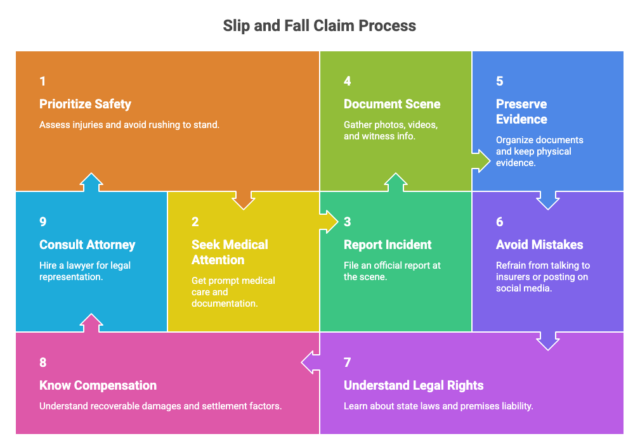
Step 1: Prioritize Your Safety and Assess Your Injuries
The moments immediately following a fall are disorienting. Your first priority must always be your physical well-being. Do not rush to stand up. Take a deep breath and evaluate how you feel before attempting to move.
Do Not Rush to “Shake It Off”
Many victims try to brush off a fall due to embarrassment. This is a serious mistake. Adrenaline can mask severe pain for minutes or even hours after an injury. If you stand up too quickly, you risk worsening an underlying injury like a spinal fracture or torn ligament. Stay on the ground for a moment. Check your limbs for pain, numbness, or limited mobility. If you feel sharp pain in your back, neck, or head, ask someone nearby to call 911 immediately.
Recognize the Signs of Serious Trauma
Some injuries are immediately obvious, but others take time to manifest. Watch for symptoms like dizziness, nausea, blurred vision, or intense back pain. Head trauma is especially dangerous because symptoms can be delayed. You can learn more about the unique challenges of proving a traumatic brain injury (TBI) in court and why early documentation is so important. Never dismiss these warning signs.
Step 2: Seek Immediate Medical Attention
Getting prompt medical care is the single most important step for both your health and your legal claim. You should visit an emergency room or urgent care center as soon as possible, even if you feel only minor discomfort.
Why Medical Records Are Critical for Your Claim
Insurance companies will look for any reason to deny your claim. If you delay treatment, they will argue that your injuries are unrelated to the fall. Immediate medical records establish a direct, documented link between the accident and your harm. These records prove the severity of your condition and show that you took your injuries seriously. Consistent follow-up treatment further strengthens your case.
What to Tell Your Doctor
Be completely honest with your healthcare provider. Explain exactly how the fall occurred and what surface you landed on. Detail every symptom you are experiencing, no matter how minor it seems. Do not exaggerate, but do not minimize your pain either. Your doctor’s notes and diagnosis will serve as vital evidence throughout the entire claims process.
Step 3: Report the Incident
You must officially report the accident before leaving the premises. This creates a formal record of the event and prevents the property owner from later denying the fall ever happened.
How to File an Incident Report at a Business
If you fall in a store, restaurant, or other commercial property, ask to speak with the manager immediately. Request that they complete an official incident report. Provide the basic facts of what happened without speculating about fault. Do not apologize or make statements like “I should have been more careful.” Even casual admissions can be used against you later. Always ask for a copy of the report before you leave the premises.
Reporting a Fall on Public or Private Property
Falling on a public sidewalk, government-owned property, or a private rental property involves different notification rules. You must notify the local municipality or property owner in writing. These cases often have shorter deadlines than standard personal injury claims. You can read our detailed guide on slip and fall incidents and proving property owner negligence in court to understand your rights under premises liability law.
Step 4: Document the Scene and Gather Evidence
Evidence disappears quickly after a slip and fall accident. Ice melts, spills are mopped up, and hazards are repaired. You must gather proof while you are still at the scene.
What Photos and Videos to Take
Use your smartphone to document everything around you. Take photos of the exact spot where you fell. Capture the specific hazard that caused your fall, such as a wet floor, broken stair, loose mat, or uneven pavement. Photograph any missing or inadequate warning signs. Also take pictures of your visible injuries and any torn or damaged clothing. Video footage of the surrounding area, including lighting conditions, adds another powerful layer of evidence.
How to Collect Witness Information
Independent witnesses are often the deciding factor in disputed slip and fall cases. If anyone saw you fall, approach them calmly and ask for their name, phone number, and email address. Their testimony can validate your account of events and counter any attempts by the property owner to deny liability. Do not rely on the business or property owner to collect this information on your behalf.
Step 5: Preserve Your Evidence and Build Your File
Organizing your evidence from the very beginning makes the entire legal process far smoother. Start building a dedicated file for your case as soon as you get home.
Keep a Detailed Recovery Journal
Write down how you feel every single day following the accident. Note your pain levels, sleep disruptions, emotional struggles, and any limitations on your daily activities. Document specific tasks you can no longer perform, such as driving, cooking, or exercising. This journal gives your attorney concrete, day-by-day documentation to demonstrate the true impact of your injuries on your quality of life.
Organize All Your Documentation
Keep all medical bills, prescription receipts, and correspondence with the property owner or their insurer in one dedicated folder. Save the shoes and clothing you were wearing during the fall and do not wash them. They serve as physical evidence of the conditions at the time of the accident. A well-organized file makes it far easier for your attorney to build a compelling case.
Step 6: Avoid These Common Mistakes After a Slip and Fall
Saying or doing the wrong thing in the days following your accident can severely damage your claim. Insurance adjusters are trained professionals who know how to use your words against you.
What Not to Say to the Property Owner’s Insurer
The property owner’s insurance company may contact you very quickly after the accident. Do not give them a recorded statement without speaking to an attorney first. Do not speculate about what caused your fall. Do not accept their first settlement offer. These initial offers are almost always far too low and rarely account for long-term medical care, future lost wages, or pain and suffering. Direct all communication to your attorney instead.
Why You Should Stay Off Social Media
Insurance adjusters routinely monitor the social media profiles of claimants. A single photo of you smiling at a family gathering or going for a walk can be used to argue that you are not truly injured. There are many compelling reasons why you shouldn’t post on social media after an injury. Keep your life private and your profiles inactive throughout the entire claims process.
Step 7: Understand Your Legal Rights Under Ohio and Florida Law
The legal framework governing slip and fall accidents varies by state. Understanding the rules that apply to your situation is essential for building a successful claim.
Ohio Slip and Fall Laws
Ohio follows a modified comparative negligence standard. This means you can still recover compensation even if you were partially at fault for the fall. However, if you are found to be more than 50% responsible, you cannot recover any damages. Ohio generally gives victims two years from the date of the accident to file a personal injury lawsuit. You can find a detailed breakdown of the process in our guide on how to start a personal injury claim in Ohio.
Florida Slip and Fall Laws
Florida also uses a modified comparative negligence rule. Victims who are more than 50% at fault are barred from recovering compensation. Florida recently shortened its statute of limitations to two years for negligence-based personal injury claims. Acting quickly is essential. Our guide on how to start a personal injury claim in Florida provides a full overview of the steps involved.
The Four Elements of a Premises Liability Claim
To win a slip and fall case, you must generally prove four things. First, a dangerous condition existed on the property. Second, the owner knew or should have known about it. Third, the owner failed to fix it or warn visitors. Fourth, that failure directly caused your injuries. An experienced attorney will help you gather the evidence needed to satisfy each of these elements.
Step 8: Know What Compensation You May Be Entitled To
Slip and fall victims can recover significant compensation for their losses. Understanding the full scope of available damages helps you avoid accepting a low settlement offer.
Types of Recoverable Damages
The table below summarizes the most common categories of compensation in a slip and fall case.
| Type of Damage | What It Covers |
| Medical Expenses | Emergency care, surgery, physical therapy, future treatment |
| Lost Wages | Income lost while recovering from your injuries |
| Loss of Earning Capacity | Reduced ability to work in the future due to permanent injury |
| Pain and Suffering | Physical pain and emotional distress caused by the accident |
| Property Damage | Damage to personal items like glasses, phones, or clothing |
Factors That Affect Your Settlement Value
Several factors influence how much your claim is worth. The severity and permanence of your injuries matter most. The clarity of the property owner’s negligence also plays a major role. Your own percentage of fault, your age, and your pre-existing medical conditions can all affect the final number. A lawyer must review your specific circumstances to give you a realistic estimate.
Step 9: Consult an Experienced Slip and Fall Attorney
Handling a premises liability claim on your own is extremely difficult. Property owners and their insurers have experienced legal teams working to minimize what they pay you. Hiring a skilled attorney levels the playing field significantly.
Why You Need Legal Representation
An attorney will conduct a thorough investigation of your accident. They will gather surveillance footage, review maintenance records, and interview witnesses. Many people wonder, is it worth making a personal injury claim? The answer is almost always yes when a property owner’s negligence caused your injuries. Your attorney will handle all negotiations and fight to maximize your recovery.
What to Bring to Your First Consultation
Bring every piece of documentation you have gathered to your first meeting. This includes photos from the scene, your incident report copy, medical records, bills, and your recovery journal. The more information your attorney has, the faster they can assess your case and advise you on the best course of action.
Understanding Attorney Fees
Many victims worry about the cost of legal help. Most personal injury lawyers, including those at Pencheff & Fraley, work on a contingency fee basis. This means you pay absolutely nothing upfront. Your attorney only gets paid if they win your case. You can find a full explanation in our guide on how much it costs to hire a personal injury lawyer.
Conclusion: Take Action Before It Is Too Late
A slip and fall accident can change your life in an instant. The steps you take in the hours and days that follow will determine whether you receive the full compensation you deserve or walk away with nothing. Seek medical attention immediately. Document everything. Report the incident. And consult an attorney before speaking with any insurance company.
The team at Pencheff & Fraley has helped thousands of personal injury victims across Ohio and Florida recover the compensation they deserve. We offer free, no-obligation consultations. You pay nothing unless we win your case. If you or a loved one has been injured in a slip and fall accident, contact us today to speak with an experienced personal injury attorney.
Frequently Asked Questions
How long do I have to file a slip and fall claim?
The time limit varies by state. In Ohio, you generally have two years from the date of the accident to file a personal injury lawsuit. In Florida, the statute of limitations is also two years for negligence-based claims following a recent legislative change. These deadlines are strict. Missing them means permanently losing your right to sue. Always consult an attorney as soon as possible after your accident.
How much is a slip and fall case worth?
There is no single average settlement amount for slip and fall cases. The value of your claim depends on the severity of your injuries, your total medical expenses, the amount of income you lost, and the degree of the property owner’s negligence. Cases involving permanent disability or severe trauma can be worth hundreds of thousands of dollars. A lawyer must review your specific damages to provide a realistic estimate.
What if I was partially at fault for my fall?
You can still recover compensation even if you were partially responsible for the accident. Both Ohio and Florida use modified comparative negligence rules. Under this standard, your total compensation is reduced by your percentage of fault. For example, if you are found 20% at fault, you recover 80% of your total damages. You can find more information about these legal standards through the Legal Information Institute. However, if you are found more than 50% at fault, you cannot recover any compensation.
Do I need a lawyer for a slip and fall accident?
Yes, hiring an attorney is strongly recommended. Premises liability cases are notoriously difficult to prove. Property owners and their insurers will aggressively dispute liability and minimize the value of your injuries. An experienced personal injury attorney knows how to gather the necessary evidence, navigate complex legal standards, and force insurers to pay a fair settlement. Without legal representation, you are at a significant disadvantage.
What evidence do I need to prove a slip and fall case?
Strong evidence is the foundation of every successful slip and fall claim. The most valuable types of evidence include photographs and videos of the hazard and the scene, a copy of the official incident report, witness contact information and statements, surveillance camera footage, your medical records and bills, and your personal recovery journal. The sooner you gather this evidence, the better your chances of success.
Should I consider a second medical opinion after a slip and fall?
Yes, getting a second medical opinion is often a wise decision, especially if your initial diagnosis seems incomplete or if your symptoms are worsening. You can read more about whether you should consider a second opinion after a personal injury on our blog. A thorough medical evaluation ensures your injuries are fully documented and that you receive the appropriate treatment.
Protect Your Claim and Your Future
Contact us today for a free, no-obligation consultation. We will review your case, answer your questions, and explain your legal options. Learn how we can help you on the road to recovery. Pay nothing unless we win your case.
Call us at 904-770-4953 or visit our website at www.pencheffandfraley.com to schedule your free case consultation.
We’re Here for You 24/7
We are available 24/7 to take your call. If you are unable to travel, we will come to you. The sooner you call, the stronger your case can be. Your path to maximum compensation and justice starts with a single phone call to Pencheff & Fraley.
Author: Pencheff and Fraley Legal Team
Disclaimer: This article is for informational purposes only and does not constitute legal advice. Every case is unique, and you should consult with a qualified attorney about your specific situation.