
Being in a car accident is a jarring and stressful experience. When you’re a passenger in an Uber or Lyft, the situation becomes even more complex. You’re not in control of the vehicle, and you’re suddenly caught in a web of insurance policies, legal questions, and medical concerns. If you’ve been injured as a passenger in a rideshare vehicle in Florida, you likely have a flood of questions: Who is responsible? How will my medical bills be paid? What are my rights? This guide will provide you with a comprehensive overview of what to do if you’re injured as a passenger in an Uber or Lyft in Florida, empowering you with the knowledge to protect your rights and secure the compensation you deserve.
At Pencheff & Fraley, we understand the physical, emotional, and financial toll a rideshare accident can take. Our experienced Florida personal injury attorneys are here to guide you through every step of the process, from the critical moments after the crash to the final resolution of your claim. This article will cover the immediate steps you must take, your legal rights as a passenger, the intricacies of Florida’s rideshare insurance laws, and the compensation you may be entitled to.
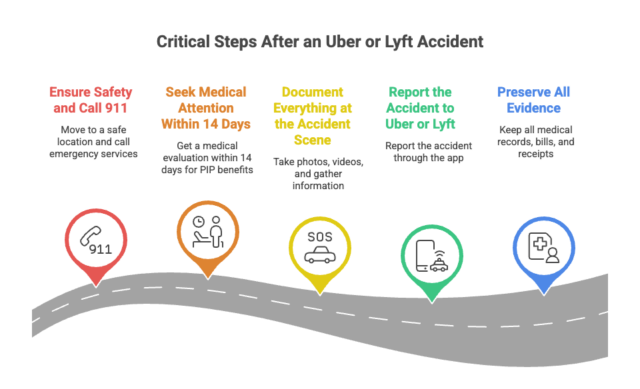
Critical Steps to Take Immediately After Your Uber or Lyft Accident
The actions you take in the minutes, hours, and days following a rideshare accident can have a significant impact on your health and your ability to recover financial compensation. It’s crucial to act deliberately and strategically to protect yourself.
1. Ensure Safety and Call 911
Your immediate priority after any car accident is your safety and the safety of others. If possible, move to a safe location away from traffic. Then, call 911 immediately. This is essential for several reasons. First, it ensures that law enforcement and emergency medical services are dispatched to the scene. A police officer will create an official accident report, which is a vital piece of evidence in any personal injury claim. Second, even if you feel your injuries are minor, it’s crucial to be evaluated by a medical professional. Some serious injuries, such as internal bleeding or traumatic brain injuries, may not have immediate symptoms.
2. Seek Medical Attention Within 14 Days (Florida’s Critical Deadline)
In Florida, seeking prompt medical attention is not just a good idea for your health—it’s a legal necessity for your insurance claim. Florida’s Personal Injury Protection (PIP) law, which is part of the state’s no-fault insurance system, requires you to seek initial medical treatment within 14 days of the accident to be eligible for PIP benefits. If you fail to do so, you may forfeit your right to this coverage, which is often the primary source of payment for your initial medical bills.
Even if you feel fine after the accident, it’s crucial to get a thorough medical evaluation. Adrenaline can mask pain, and some injuries, like whiplash or concussions, can take days or even weeks to fully manifest. A medical record from a doctor’s visit immediately following the accident creates a direct link between the crash and your injuries, which is crucial for your claim.
3. Document Everything at the Accident Scene
If you are physically able, gather as much evidence as possible at the scene of the accident. This documentation will be invaluable when it comes to proving liability and the extent of your damages. Use your smartphone to:
- Take photos and videos: Capture images of all vehicles involved, including the license plates and the damage to each car. Take pictures of your injuries, the accident scene, any relevant traffic signs or signals, and the weather and road conditions.
- Screenshot your trip details: Open the Uber or Lyft app and take a screenshot of your trip information. This should include the driver’s name, photo, vehicle information, and the route of your trip.
- Gather information: Exchange contact and insurance information with all drivers involved in the accident. Also, get the names and contact information of any witnesses who saw what happened.
4. Report the Accident to Uber or Lyft
Both Uber and Lyft have features within their apps to report an accident. It’s important to do this as soon as possible. When you report the accident, stick to the facts. Provide the date, time, and location of the crash, and a brief, factual description of what happened. Avoid speculating about who was at fault or the extent of your injuries. It’s also wise to refrain from giving a recorded statement to any insurance adjuster—from your own insurance company, the rideshare company’s insurer, or the other driver’s insurer—until you have spoken with an experienced rideshare accident attorney.
5. Preserve All Evidence
In the days and weeks following the accident, be meticulous about preserving all documents and records related to the crash and your injuries. This includes:
- Medical records and bills
- Receipts for any out-of-pocket expenses, such as prescription medications or medical equipment
- Documentation of your lost wages from your employer
- The trip receipt from the Uber or Lyft app
- Any correspondence you receive from insurance companies
Your Legal Rights as an Uber or Lyft Passenger in Florida
As a passenger in a rideshare vehicle, you have significant legal rights. In almost all cases, you are not at fault for the accident. This means you have the right to seek compensation for your injuries and other losses from the at-fault party or parties. Your rights are protected under Florida law, specifically Florida Statute 627.748, which governs insurance requirements for Transportation Network Companies (TNCs) like Uber and Lyft.
You also have the right to legal representation. Navigating the complexities of a rideshare accident claim can be overwhelming, especially when you’re dealing with serious injuries. An experienced personal injury attorney can protect your rights, handle all communications with insurance companies, and fight to ensure you receive the maximum compensation you deserve. Most personal injury law firms, including Pencheff & Fraley, work on a contingency fee basis, which means you don’t pay any attorney’s fees unless we win your case.
How Uber and Lyft Insurance Works in Florida (Florida Statute 627.748)
One of the most confusing aspects of a rideshare accident is determining which insurance policy applies. Florida law has specific insurance requirements for Uber and Lyft that depend on the driver’s status at the time of the accident. There are three distinct phases of rideshare insurance coverage:
Understanding the Three Phases of Rideshare Insurance Coverage
| Driver Status | Liability Coverage | PIP Coverage | UM/UIM Coverage |
| App Off | Driver’s personal insurance | Driver’s personal | Driver’s personal |
| App On, Waiting | $50k/$100k/$25k | Required | Required |
| Passenger in Vehicle | $1,000,000 | Limousine-level | Required |
Phase 1: App Off (Driver’s Personal Insurance Applies)
If the Uber or Lyft driver’s app is off at the time of the accident, they are considered to be driving for personal reasons. In this case, their personal auto insurance policy would be the primary source of coverage. However, it’s important to note that most personal auto insurance policies have a business-use exclusion, which can complicate matters if they were between rideshare trips.
Phase 2: App On, Waiting for Ride Request
When a rideshare driver is logged into the app and is available to accept a ride request, but has not yet accepted one, a lower level of coverage applies. Florida law requires TNCs to provide the following minimum coverage in this phase:
- $50,000 for death and bodily injury per person
- $100,000 for death and bodily injury per incident
- $25,000 for property damage
This coverage is primary and applies from the moment the driver logs into the app until they accept a ride request.
Phase 3: Passenger in Vehicle (Prearranged Ride)
Once a driver accepts a ride request and is on the way to pick up a passenger, or while a passenger is in the vehicle, the highest level of insurance coverage is triggered. During this phase, Florida Statute 627.748 mandates that Uber and Lyft provide:
- $1,000,000 in primary liability coverage for death, bodily injury, and property damage.
This substantial policy is designed to protect injured passengers and other parties in the event of a serious accident. It is the primary source of compensation for your injuries if the rideshare driver is at fault.
Understanding Florida’s PIP (Personal Injury Protection) for Rideshare Accidents
Florida is a “no-fault” insurance state, which means that regardless of who is at fault for an accident, you must first turn to your own Personal Injury Protection (PIP) coverage for your initial medical expenses and lost wages. But how does this work when you’re a passenger in an Uber or Lyft?
What Florida PIP Covers
If you own a vehicle in Florida and have your own auto insurance policy, your PIP coverage will be the primary source of payment for your injuries, even though you were in a rideshare vehicle. If you do not own a vehicle or have your own PIP coverage, you may be able to access PIP benefits through the rideshare driver’s policy or the TNC’s policy. PIP generally covers:
- 80% of your reasonable medical expenses
- 60% of your lost wages
- Up to a combined total of $10,000
It’s important to note that if a medical provider does not diagnose you with an “Emergency Medical Condition” (EMC), your PIP medical benefits may be limited to just $2,500.
The Critical 14-Day Rule
As mentioned earlier, the 14-day rule is a critical component of Florida’s PIP law. You must seek initial medical treatment from a qualified healthcare provider within 14 days of the rideshare accident. If you fail to do so, your insurance company can deny your PIP claim, leaving you responsible for your medical bills. This is why it is absolutely essential to see a doctor as soon as possible after an accident, even if you don’t think you’re seriously injured.
When You Can Go Beyond No-Fault
While PIP coverage is the first line of defense, the $10,000 limit is often insufficient to cover the costs of a serious injury. Florida law allows you to step outside the no-fault system and file a personal injury lawsuit against the at-fault driver to recover damages for pain and suffering and other non-economic losses if your injuries meet a certain “serious injury threshold.” This threshold is met if your injury consists in whole or in part of:
- Significant and permanent loss of an important bodily function
- Permanent injury within a reasonable degree of medical probability
- Significant and permanent scarring or disfigurement
- Death
An experienced personal injury attorney can help you determine if your injuries meet this threshold and pursue a claim for the full extent of your damages.
Who Is Liable for Your Injuries as an Uber or Lyft Passenger?
As a passenger, you are an innocent victim in a rideshare accident. The question of liability, or legal responsibility, will fall on one or more of the drivers involved.
If the Rideshare Driver Was at Fault
If your Uber or Lyft driver caused the accident through negligence (such as speeding, distracted driving, or driving under the influence), you can file a claim against them. Because you were a passenger in the vehicle, Uber or Lyft’s $1 million liability policy would apply, providing a significant source of potential compensation for your injuries.
If Another Driver Was at Fault
If another driver on the road caused the accident, their bodily injury liability insurance would be the primary source of compensation. However, if the at-fault driver is uninsured or does not have enough insurance to cover your damages, you may be able to turn to the uninsured/underinsured motorist (UM/UIM) coverage provided by Uber or Lyft’s policy.
Multiple Parties at Fault
In some cases, both your rideshare driver and another driver may share fault for the accident. Florida follows a modified comparative negligence rule. This means that you can still recover damages as long as you are not found to be more than 50% at fault for the accident. Since a passenger is almost never at fault, this rule primarily affects how the drivers’ insurance companies will apportion liability. An attorney can help navigate these complex situations to ensure all at-fault parties are held accountable.
Types of Injuries Commonly Suffered by Rideshare Passengers
Rideshare passengers can suffer a wide range of injuries, from minor to catastrophic. Some of the most common injuries we see in our practice include:
- Whiplash and neck injuries: The sudden back-and-forth motion of a car crash can cause severe damage to the soft tissues of the neck.
- Traumatic brain injuries (TBI): Even a seemingly minor impact can cause the brain to strike the inside of the skull, leading to concussions or more severe TBIs.
- Spinal cord injuries: Damage to the spinal cord can result in partial or complete paralysis and lifelong medical needs.
- Broken bones and fractures: The force of a collision can easily cause bones to break or fracture.
- Internal injuries: The impact of a crash can cause damage to internal organs, which may not be immediately apparent.
- Cuts, lacerations, and bruising: Broken glass and contact with the interior of the vehicle can cause significant cuts and bruises.
- Emotional trauma and PTSD: The psychological impact of a serious accident can be just as debilitating as the physical injuries.
What Compensation Can You Recover as an Injured Uber or Lyft Passenger?
If you’ve been injured in a rideshare accident, you may be entitled to recover compensation for a wide range of damages. These damages are typically categorized as economic and non-economic.
Economic Damages
Economic damages are the tangible, financial losses you have incurred as a result of the accident. These can include:
- Past and future medical expenses: This includes everything from emergency room visits and hospital stays to surgeries, physical therapy, and prescription medications.
- Lost wages and income: If your injuries have caused you to miss work, you can be compensated for the income you have lost.
- Diminished earning capacity: If your injuries are permanent and will affect your ability to earn a living in the future, you can seek compensation for this loss.
- Property damage: If any of your personal property, such as a laptop or phone, was damaged in the crash, you can be compensated for its repair or replacement.
Non-Economic Damages
Non-economic damages are the intangible losses you have suffered. These are often the most significant component of a personal injury claim and can include:
- Pain and suffering: This compensates you for the physical pain and emotional distress you have endured.
- Loss of enjoyment of life: If your injuries prevent you from participating in activities you once enjoyed, you can be compensated for this loss.
- Permanent disability or disfigurement: If you have suffered a permanent injury or scarring, you can seek compensation for the long-term impact on your life.
What to Expect: Settlement Ranges
Every case is unique, and the value of your claim will depend on the severity of your injuries and the specific facts of your case. However, based on our experience, we can provide some general settlement ranges:
- Minor injuries: For cases involving minor injuries with a full recovery, settlements are typically under $15,000.
- Major injuries: For cases involving more serious injuries that may require surgery or extensive treatment, settlements can often exceed $50,000.
- Severe injuries: In cases of catastrophic injuries, such as a TBI or spinal cord injury, settlements can reach the $1 million policy limits of the rideshare company’s insurance.
Step-by-Step: The Rideshare Injury Claim Process in Florida
Navigating the claims process can be confusing. Here is a general timeline of what to expect:
- Immediate Aftermath (Day 1): Your focus should be on your safety and seeking medical care. Document the scene if you are able.
- First 14 Days: This is the critical window to seek initial medical treatment to protect your PIP eligibility.
- Weeks 1-2: Report the accident to the rideshare company and any other relevant insurance companies. Preserve all evidence.
- Weeks 2-4: This is the ideal time to consult with a personal injury attorney. Your lawyer will launch an independent investigation into the accident.
- Months 1-3: Continue with your medical treatment as prescribed by your doctors. Your attorney will gather all of your medical records and bills.
- Months 3-6: Once you have reached maximum medical improvement (MMI), your attorney will prepare and send a demand letter to the insurance company.
- Months 6-12: Your attorney will negotiate with the insurance company to reach a fair settlement. If the insurance company is unwilling to offer a fair settlement, your attorney may recommend filing a lawsuit.
- 12-24 Months: If a lawsuit is filed, the litigation process will begin. This can involve discovery, depositions, and mediation. Most cases are settled before trial.
- Two-Year Deadline: Remember that you have two years from the date of the accident to file a lawsuit in Florida.
Critical Mistakes to Avoid After Your Uber or Lyft Accident
What you do after a rideshare accident is just as important as what you don’t do. Here are some critical mistakes to avoid:
- DON’T admit fault or apologize for anything at the scene of the accident.
- DON’T give a recorded statement to any insurance adjuster without first speaking to an attorney.
- DON’T accept the first settlement offer from an insurance company. It is almost always a lowball offer.
- DON’T post about the accident or your injuries on social media. Insurance companies can and will use this against you.
- DON’T delay seeking medical treatment. This can harm both your health and your legal claim.
- DON’T sign any documents from an insurance company without having them reviewed by an attorney.
Why You Need an Experienced Florida Rideshare Accident Attorney
The insurance issues in a rideshare accident case are incredibly complex. You will likely be dealing with multiple insurance companies, each with its own team of lawyers and adjusters who are trained to minimize the amount they pay out in claims. An experienced Florida rideshare accident attorney can level the playing field and fight for your rights.
At Pencheff & Fraley, we will handle all aspects of your claim, from investigating the accident and gathering evidence to negotiating with insurance companies and, if necessary, taking your case to trial. We work on a contingency fee basis, so you pay us nothing unless we win your case. This allows you to focus on what’s most important: your recovery.
Understanding the Risks: Uber and Lyft Accident Statistics
While rideshare services are generally safe, accidents do happen. According to Uber’s most recent US Safety Report, there were 127 fatal crashes involving Uber vehicles in 2021 and 2022, resulting in 153 deaths. Lyft reported 111 motor vehicle fatalities between 2020 and 2022, a 31% increase in frequency from the previous period. A study from the University of Illinois Chicago found that one-third of rideshare drivers reported being involved in a crash while on the job. And in Florida, there were over 700,000 total crashes and more than 3,100 fatalities in 2024 alone, according to the Florida Highway Safety and Motor Vehicles department. These statistics underscore the importance of knowing your rights and being prepared in the event of an accident.
Frequently Asked Questions About Uber and Lyft Passenger Accidents in Florida
Q1: What should I do immediately after being injured in an Uber or Lyft in Florida?
Ensure your safety, call 911, seek medical attention within 14 days, document the scene, and report the accident to the rideshare company.
Q2: Who pays for my injuries as an Uber or Lyft passenger in Florida?
Your own PIP insurance is primary. After that, you can file a claim against the at-fault driver’s insurance, which may be the rideshare company’s $1 million policy.
Q3: Can I sue Uber or Lyft directly in Florida?
It is difficult to sue Uber or Lyft directly because their drivers are independent contractors. However, you can file a claim against their substantial insurance policies.
Q4: How much is my rideshare passenger injury claim worth?
The value of your claim depends on the severity of your injuries, the amount of your medical bills and lost wages, and the extent of your pain and suffering.
Q5: What is Florida Statute 627.748?
This is the Florida law that sets the specific insurance requirements for rideshare companies like Uber and Lyft.
Q6: Do I need a lawyer for my Uber or Lyft passenger accident?
It is highly recommended. An experienced attorney can help you navigate the complex insurance issues and maximize your compensation.
Q7: How long do I have to file a claim after a rideshare accident in Florida?
You have two years from the date of the accident to file a personal injury lawsuit.
Q8: What if the Uber or Lyft driver wasn’t at fault?
You would file a claim against the other at-fault driver’s insurance. If they are uninsured or underinsured, you may be able to use the rideshare company’s UM/UIM coverage.
Q9: Does my PIP insurance cover rideshare accidents?
Yes, if you have a Florida auto insurance policy, your PIP coverage applies even if you are a passenger in a rideshare vehicle.
Q10: What is the 14-day rule for Florida PIP?
You must seek initial medical treatment within 14 days of the accident to be eligible for PIP benefits.
Protect Your Rights After an Uber or Lyft Accident in Florida
Being injured as a passenger in an Uber or Lyft accident can be a life-altering event. The legal and insurance complexities can be daunting, but you don’t have to face them alone. By taking the right steps immediately after the accident, understanding your rights, and working with an experienced personal injury attorney, you can protect your claim and secure the financial resources you need to recover and move forward.
Contact Pencheff & Fraley for Your Free Consultation
If you have been injured in a rideshare accident in Florida, contact the dedicated personal injury attorneys at Pencheff & Fraley today.
Contact Pencheff and Fraley today for a free, no-obligation consultation. 904-770-4953 Our experienced Florida personal injury attorneys will review your case, explain your options, and help you make the best decision for your future. We understand the frustration you’re experiencing, and we’re here to provide the dedicated representation you deserve. Call us now or fill out our online form to take the first step towards better representation and a stronger case.
Looking for state-specific guidance? Read our detailed guide on How to start a personal injury claim in Ohio
Author: Pencheff and Fraley Legal Team
Disclaimer: This article is for informational purposes only and does not constitute legal advice. Every case is unique, and you should consult with a qualified attorney about your specific situation.