

Florida-focused guide | Information current as of October 19, 2026
Why the statute of limitations matters in injury claims is simple: waiting too long can end your right to sue. Medical bills, missed work, and serious pain do not automatically extend a legal deadline. In Florida, most ordinary negligence lawsuits now have a two-year filing period, subject to important qualifications.
That period is not permission to wait. Your claim type, injury date, and defendant can change the analysis. Understanding these differences helps you protect your options while focusing on recovery.
Why the Statute of Limitations Matters in Injury Claims
A statute of limitations sets the time allowed to bring a lawsuit. It helps disputes reach court while evidence remains available. It also limits how long potential defendants face unresolved claims. Cornell Law School’s explanation of statutes of limitations describes this legal framework.
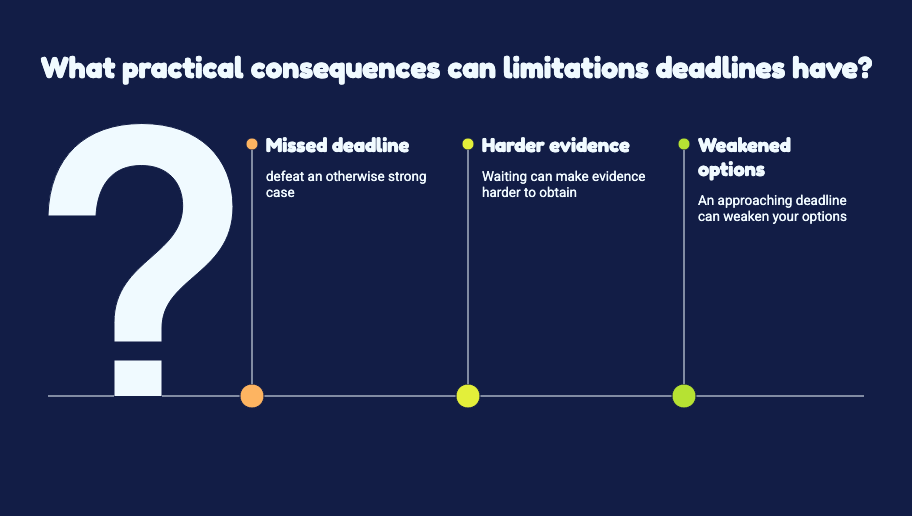
For injured people, the practical consequences fall into three categories.
1. A missed deadline can defeat an otherwise strong case
You may have clear evidence that another person caused your injuries. You may also have substantial medical expenses. Neither fact necessarily saves a lawsuit filed too late.
If the defendant successfully raises the limitations defense, the court can dismiss the case. That can prevent recovery through that lawsuit without deciding who caused the accident. A strong claim still needs timely legal action.
2. Waiting can make evidence harder to obtain
Surveillance recordings may be overwritten. Witnesses may become difficult to locate or forget important details. Damaged vehicles may be repaired before anyone documents their condition.
These problems can arise long before the lawsuit deadline. Early action gives your lawyer more opportunity to investigate. It can also help identify every potentially responsible party.
3. An approaching deadline can weaken your options
An insurer may continue investigating while your filing period runs. Negotiations can take time, especially when injuries require ongoing care. Without enough preparation time, protecting your right to sue becomes harder.
The deadline does not require your entire case to finish within two years. It generally concerns when the lawsuit must begin. Settlement or trial may occur later.
Florida Personal Injury Statute of Limitations: The Basic Rule
Florida Statutes section 95.11(5)(a) provides a two-year period for actions founded on negligence. Common examples include negligence claims arising from vehicle collisions and falls on unsafe property.
However, “personal injury” describes many different legal claims. It does not mean every injured person has the same deadline. The legal basis of your claim matters.
What changed on March 24, 2023?
Florida’s 2023 tort-reform law shortened the ordinary negligence period from four years to two. The Florida Senate’s HB 837 record confirms approval on March 24, 2023.
Section 28 of the enacted bill applies the limitations amendment to causes of action accruing after the effective date. Earlier-accruing negligence claims generally remain subject to the former four-year period. Claims near that transition date require careful review.
An older injury does not automatically mean your claim has expired. It also does not guarantee that four years applies. Ask a Florida attorney to assess the specific facts.
Which accident claims commonly involve the two-year rule?
Ordinary negligence claims may arise from car accidents, truck accidents, and motorcycle accidents. The same general rule can apply to a negligent property owner’s conduct.
Still, a collision may involve several claims or defendants. A defective vehicle component or government-owned vehicle can introduce different rules. Identifying the correct claim is part of calculating the deadline.
When Does the Filing Period Start?
The legal term accrual means the point when a cause of action comes into existence. Florida Statutes section 95.031 generally starts the period when the last required element occurs.
For many ordinary accident claims, that happens when the accident causes injury. The starting point does not usually wait for a settlement offer. It also does not necessarily wait for your final diagnosis or completed treatment.
Do delayed symptoms restart the deadline?
Not automatically. Some injuries become more noticeable days or weeks after an accident. That does not create a general discovery-rule extension for ordinary negligence claims.
Certain claim categories have specific discovery provisions. Medical malpractice and product liability are examples. Their rules should not be applied to every car accident or slip-and-fall claim.
Tell your lawyer when the accident happened, when symptoms appeared, and when doctors identified the injury. Those details help determine which timing rules may apply.
Hypothetical example: treatment is still ongoing
Assume an ordinary negligence claim accrued on June 10, 2025. Assume no exception or special deadline applies. Its two-year anniversary would be June 10, 2027.
Continuing physical therapy would not, by itself, move that anniversary. The injured person should obtain advice well before then. Counsel must verify the actual filing date and applicable procedural rules.
This example is illustrative, not a deadline calculation for your case.
An Insurance Claim Is Not the Same as a Lawsuit
Opening an insurance claim does not ordinarily preserve your lawsuit deadline. Neither does sending medical records, making a demand, or discussing settlement. Hiring a lawyer alone does not file the lawsuit either.
These activities can support your claim. They generally are not independent tolling grounds under Florida’s statutory tolling rules. A specific legal exception or enforceable agreement needs separate review.
What if the adjuster says the claim remains open?
An open insurance file is not assurance that your court deadline remains open. The adjuster may request more records or say an offer is coming. Continue tracking the legal deadline independently.
For example, settlement discussions might continue into the final month of a filing period. That does not automatically give the injured person another month to sue. A lawyer can assess whether filing is needed while negotiations continue.
Florida’s 14-day PIP rule is a separate requirement
Florida personal injury protection, or PIP, involves another timing issue. Section 627.736(1)(a) requires qualifying initial services and care within 14 days for PIP medical benefits.
That requirement is not the deadline for suing a negligent driver. Missing the PIP treatment window does not automatically eliminate every potential injury claim. Likewise, receiving timely treatment does not extend the lawsuit period.
Seek appropriate medical attention promptly. Ask separately about insurance benefits and your right to pursue a liability claim.
Injury Claims That Can Follow Different Deadlines
The two-year negligence rule is the starting point for many claims, not a universal answer. These categories deserve separate review.
Wrongful death
Florida generally allows two years for wrongful-death actions under section 95.11(5)(e). The period commonly runs from death, rather than an earlier accident date. The same statute also contains special exceptions for certain intentional killings.
Families should obtain advice promptly. Estate administration and identifying the proper representative can also require preparation.
Medical malpractice
Section 95.11(5)(c) generally provides two years from the incident or its actual or reasonably discoverable occurrence. A four-year outer limit generally applies, with statutory exceptions involving concealment and young children.
Medical malpractice also has pre-suit investigation and notice requirements under section 766.106. Proper compliance can affect tolling. An ordinary complaint to an insurer is not a substitute for that statutory process.
Defective products and intentional injuries
Section 95.11(3)(d) provides four years for specified product-related personal injury actions. Many intentional torts also have four-year periods under subsection (3)(n), subject to exceptions.
Product claims can additionally involve discovery provisions and a statute of repose under section 95.031. A statute of repose sets an outer boundary tied to an event such as product delivery. Its operation differs from a limitations period.
Do not assume every accident involving a product has four years. Different claims arising from the same incident can require different analyses.
Claims Against Florida Government Entities Need Special Attention
A crash involving a city vehicle or an injury involving public property can raise sovereign-immunity issues. That framework limits when and how the government may be sued. It also imposes requirements beyond an ordinary insurance claim.
Written notice and a lawsuit are separate steps
Under Florida Statutes section 768.28(6), written claim notice is generally required within three years. Notice generally goes to the appropriate agency and, where required, the Department of Financial Services. Wrongful death has a special two-year notice provision.
Subsection (14) generally provides four years to file covered government tort lawsuits. Medical malpractice and wrongful death follow their separate limitations periods. Denial, waiting-period, and specified tolling provisions can affect the process.
The notice deadline is not the lawsuit deadline. A police report or informal conversation with an employee should not be treated as compliant notice.
Hypothetical example: a city-owned vehicle
Suppose a city employee causes a collision while performing work duties. The injured person should not rely solely on the ordinary two-year negligence summary. Counsel must assess government status, notice recipients, waiting requirements, and the correct lawsuit period.
The rules may also differ if a federal entity is involved. Obtain case-specific advice before choosing a deadline.
Can Exceptions Extend a Florida Injury Deadline?
Sometimes, but exceptions are narrower than many online summaries suggest. Tolling means temporarily suspending the running of a limitations period. It requires a legally recognized basis.
Section 95.051 lists specific grounds. Do not assume that hospitalization, ongoing pain, or difficulty finding a lawyer qualifies.
Minors do not always get an automatic extension
A child’s age does not automatically suspend every Florida injury deadline. The statute addresses particular circumstances involving parents, guardians, adverse interests, and incapacity. Some provisions also impose a seven-year outer limit.
Medical-malpractice claims involving children have their own rules. Parents should seek advice promptly instead of assuming they can wait until adulthood.
Incapacity and a defendant’s absence have limits
Certain adjudicated-incapacity circumstances can support tolling. Being injured or temporarily unable to work is not necessarily enough.
Defendant absence or concealment can also matter in specified circumstances. However, those grounds do not apply when sufficient service of process remains available. Moving out of Florida does not automatically stop every filing period.
What if you think the deadline already passed?
Contact a lawyer promptly rather than relying on an online calculation. Your claim category, accrual date, or a valid exception could change the answer. An attorney can also identify whether other claims remain available.
At the same time, do not assume an exception will rescue a late lawsuit. A legal review can clarify the risk without promising a result.
How to Choose a Personal Injury Lawyer Before Time Runs Out
Look for relevant Florida injury experience and clear communication about deadlines. Ask who will review your documents and handle your case. A consultation should explain uncertainty rather than promise a guaranteed outcome.
The Florida Bar’s lawyer-selection guidance recommends checking a lawyer’s identity, qualifications, and discipline history. It also emphasizes finding someone you trust professionally and personally.
You can learn about Pencheff & Fraley’s personal injury representation before requesting a case review. Discuss the written fee agreement and responsibility for costs before hiring counsel.
Best accident lawyer questions to ask about deadlines
The best questions address your case, not marketing promises:
- What claim types and defendants need investigation?
- What deadline applies, and what facts determine the starting date?
- Are government notice or medical-malpractice pre-suit steps involved?
- What action will preserve my right to sue?
- Who will track the deadline and confirm any filing?
- How will attorney fees and case expenses be handled?
An initial consultation does not itself preserve a deadline or guarantee representation. Confirm whether the firm has accepted your case and what action comes next.
What to Gather Before Your Consultation
Bring what you already have. You do not need a perfect file before contacting a lawyer. Missing documents can be identified during the review.
Helpful information includes:
- The accident date, location, and a short description of what happened.
- Police or incident reports and witness contact details.
- Photographs, videos, and information about possible surveillance footage.
- Medical records, bills, and the dates of initial treatment.
- Insurance letters, claim numbers, and any settlement offers.
- Work-loss information and the names of potentially responsible parties.
Ask promptly about preserving evidence that might disappear. Keep copies of communications and avoid altering or discarding potential evidence.
Frequently Asked Questions
How long do I have to file a personal injury lawsuit in Florida?
Most ordinary negligence lawsuits have a two-year filing period. The 2023 amendment applies to causes of action accruing after March 24, 2023. Earlier claims and other claim categories may follow different rules. A Florida attorney should verify your specific deadline.
Does filing an insurance claim stop the statute of limitations?
Usually, no. Opening an insurance claim, sending a demand, or discussing settlement does not automatically pause the lawsuit deadline. A legally valid exception or agreement requires separate review.
Can I wait until medical treatment ends before filing a lawsuit?
Do not assume you can. Ongoing treatment does not ordinarily extend a negligence filing period. Your lawyer can assess how to preserve the claim while treatment continues.
What if my injuries were discovered after the accident?
Delayed symptoms do not automatically extend ordinary negligence deadlines. Certain claims, including medical malpractice and product liability, have specific discovery rules. Your claim type and facts determine whether those rules apply.
Do minors have longer to file Florida injury claims?
Not automatically. Florida tolling provisions for minors depend on specific circumstances involving a parent, guardian, or other qualifying factors. Medical-malpractice claims have separate rules. Parents should obtain prompt legal advice.
Is the 14-day PIP rule the deadline for suing a driver?
No. The 14-day rule concerns qualifying initial services and care for PIP medical benefits. A lawsuit against a negligent driver follows a separate filing deadline. Meeting one requirement does not extend the other.
What if a government agency caused my injury?
Government claims can require written notice, designated recipients, and waiting periods before a lawsuit. The notice deadline and lawsuit deadline are different. Special rules apply to medical malpractice and wrongful death. Ask counsel to review the government defendant immediately.
Can I still contact a lawyer if I think I missed the deadline?
Yes. A lawyer can examine your claim type, accrual date, and possible exceptions. Do not assume the claim is either expired or saved without a case-specific review.
Protect Your Options With a Prompt Case Review
The statute of limitations matters because it can determine whether you retain the right to sue. Early action also helps preserve evidence and leaves time for investigation. Insurance negotiations and medical recovery should not replace deadline planning.
Pencheff & Fraley assists injury victims across Florida, including Jacksonville, Tampa, and Orlando. The firm offers free consultations and handles personal injury matters on a contingency-fee basis. Discuss fees and case expenses in your written agreement.
Request a free injury consultation or call 904-562-1371. Share your accident date and any deadline concerns when you contact the team. Do not wait for an insurer’s next response before asking about your legal options.
This article provides general Florida legal information, not legal advice or a calculation of your filing deadline. Laws and case-specific circumstances can change the analysis. Contacting the firm does not itself create an attorney-client relationship or preserve a deadline.
