

Who Is Responsible for a Slip and Fall in a Parking Lot?
A simple trip to the grocery store or a day at work can quickly turn into a nightmare if you slip and fall in a parking lot. These accidents are incredibly common, often resulting in severe injuries, mounting medical bills, and lost wages. When you are injured on someone else’s property, the immediate question is: who is responsible for a slip and fall in a parking lot? Navigating the complexities of premises liability law can be overwhelming, especially when you are trying to recover from an injury.
At Pencheff and Fraley LPA, we understand the physical, emotional, and financial toll a parking lot slip and fall can take on victims and their families. Our experienced personal injury attorneys have dedicated their careers to helping injured individuals across Ohio and Florida secure the compensation they deserve. This comprehensive guide will explain the legal principles of premises liability, identify who might be held accountable for your injuries, and outline the steps you need to take to protect your rights.
Understanding Premises Liability in Parking Lot Accidents
To determine who is responsible for a slip and fall in a parking lot, it is essential to understand the legal concept of premises liability. Premises liability is the area of personal injury law that holds property owners and occupiers accountable for injuries that occur on their property due to unsafe or defective conditions. When you enter a parking lot, the party in control of that space owes you a legal duty of care to maintain a reasonably safe environment.
However, an injury alone does not automatically mean the property owner is liable. To successfully pursue a personal injury claim, you must prove that negligence occurred. This means demonstrating that the responsible party failed to act with the level of care that a reasonable person would have exercised under similar circumstances. In the context of a parking lot, negligence often involves failing to repair known hazards, failing to conduct regular inspections, or failing to warn visitors about potential dangers.
The Elements of a Successful Premises Liability Claim
Proving negligence in a parking lot slip and fall case requires establishing four key elements. First, you must show that the defendant owed you a duty of care. Generally, property owners owe the highest duty of care to invitees, which includes customers and clients who are on the premises for business purposes. Second, you must prove that the defendant breached this duty of care by creating a hazardous condition or allowing one to persist.
Third, you must demonstrate causation, meaning that the breach of duty directly caused your slip and fall accident. Finally, you must show that you suffered actual damages, such as medical expenses, lost income, and pain and suffering, as a result of the fall. Establishing these elements can be challenging, which is why it is crucial to avoid common legal pitfalls by working with a skilled attorney who can gather evidence and build a strong case on your behalf.
Common Causes of Parking Lot Slip and Fall Accidents
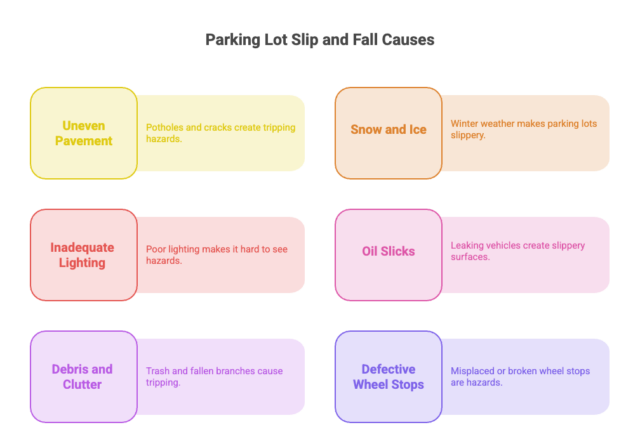
Parking lots present numerous hazards that can lead to devastating slip and fall accidents. Property owners and managers must remain vigilant to identify and address these dangers promptly. Some of the most common causes of parking lot falls include:
- Uneven Pavement and Potholes: Over time, weather conditions and heavy traffic can cause asphalt and concrete to deteriorate, creating dangerous potholes, cracks, and uneven surfaces that pose significant tripping hazards.
- Snow and Ice Accumulation: In states like Ohio, winter weather can turn parking lots into treacherous ice rinks. Property owners have a responsibility to clear snow and apply salt or sand to prevent slippery conditions.
- Inadequate Lighting: Poorly lit parking lots make it difficult for pedestrians to see hazards, such as wheel stops, debris, or changes in elevation, increasing the risk of a fall.
- Oil Slicks and Fluid Spills: Leaking vehicles can leave slick spots of oil, antifreeze, or other fluids on the pavement, creating dangerously slippery surfaces.
- Debris and Clutter: Trash, fallen branches, or discarded items left in pedestrian walkways can easily cause someone to trip and fall.
- Defective Wheel Stops: Misplaced, broken, or poorly painted wheel stops can become unexpected tripping hazards, especially in low-light conditions.
Identifying the Liable Parties
Determining who is responsible for a slip and fall in a parking lot can be complex, as multiple parties may share liability depending on the specific circumstances of the accident. A thorough investigation is often required to identify all potential defendants and hold them accountable.
The Property Owner
In many cases, the owner of the property where the parking lot is located is the primary party responsible for maintaining its safety. Whether the lot belongs to a retail store, an office building, an apartment complex, or a municipality, the owner has a legal duty to ensure the premises are reasonably safe for visitors. If the owner knew or should have known about a hazard, such as a deep pothole or a broken light fixture, and failed to address it, they can be held liable for resulting injuries.
Business Tenants and Lessees
When a business leases a commercial space, the lease agreement typically outlines who is responsible for maintaining the parking lot. In some cases, the tenant assumes control over the parking area and assumes the duty to keep it safe for customers. For example, a grocery store that leases a standalone building and its adjacent parking lot may be liable if a customer slips on an icy patch near the entrance. If multiple businesses share a parking lot, such as in a strip mall, determining liability may involve reviewing complex lease agreements and maintenance contracts.
Property Management Companies
Many property owners hire third-party property management companies to handle the day-to-day operations and maintenance of their facilities, including the parking lots. These management companies are often responsible for conducting regular inspections, coordinating repairs, and ensuring the property complies with safety regulations. If a property management company fails to fulfill its duties, resulting in a dangerous condition that causes a slip and fall, they may be held liable for negligence.
Independent Contractors and Maintenance Providers
Property owners and managers frequently contract with independent companies to perform specific maintenance tasks, such as snow removal, landscaping, paving repairs, or lighting maintenance. If an independent contractor performs their work negligently—for instance, if a snow removal company fails to properly salt an icy walkway as contracted, or a paving company leaves behind uneven asphalt—they can be held responsible for injuries caused by their subpar work.
State-Specific Laws: Ohio vs. Florida
The legal landscape for premises liability varies significantly from state to state. Because Pencheff and Fraley LPA serves clients in both Ohio and Florida, it is important to understand how the laws in these states can impact your parking lot slip and fall claim.
Ohio Premises Liability and Comparative Negligence
In Ohio, property owners owe different levels of care depending on the visitor’s status (invitee, licensee, or trespasser). For invitees, owners must maintain the premises in a reasonably safe condition and warn of hidden dangers. However, Ohio courts often apply the “open and obvious” doctrine, which states that a property owner has no duty to warn against dangers that are so apparent that a reasonable person would be expected to discover them and protect themselves. This defense is frequently used by insurance companies to deny liability in parking lot cases involving potholes or snow.
Additionally, Ohio follows a “modified comparative negligence” rule. Under this rule, you can still recover damages if you are partially at fault for your accident, provided your share of the fault is not greater than 50%. If you are found to be 50% or less at fault, your compensation will be reduced by your percentage of responsibility. If you are more than 50% at fault, you are barred from recovering any compensation.
Florida Premises Liability and the 50% Rule
Florida law also requires property owners to maintain safe premises for invitees. However, Florida has specific statutes regarding slip and falls on “transitory foreign substances” in business establishments, which can sometimes apply to parking lots. The injured person must prove that the business had actual or constructive knowledge of the dangerous condition and should have taken action to remedy it. Constructive knowledge can be shown if the condition existed for a length of time that it should have been discovered, or if the condition occurred with regularity.
Recently, Florida significantly changed its comparative negligence laws. Florida now operates under a modified comparative negligence system similar to Ohio’s. If you are found to be more than 50% at fault for your slip and fall accident, you may be completely barred from recovering any damages. This makes it more critical than ever to have a strong legal advocate to fight against allegations that you were responsible for your own injuries.
Steps to Take After a Parking Lot Slip and Fall
The actions you take immediately following a slip and fall in a parking lot can significantly impact the success of your personal injury claim. Taking the right steps helps preserve crucial evidence and protects your legal rights.
- Seek Medical Attention Immediately: Your health and safety are the top priority. Even if you believe your injuries are minor, see a doctor as soon as possible. Some serious injuries, such as concussions or internal bleeding, may not show symptoms right away. A prompt medical evaluation also creates an official record of your injuries linking them directly to the accident.
- Report the Incident: Notify the property owner, manager, or security personnel about the accident immediately. Ask them to create a written incident report and request a copy for your records. Do not sign any documents or admit fault when making the report.
- Document the Scene: If you are physically able, take photographs and videos of the exact location where you fell. Capture the hazardous condition that caused your fall, such as the pothole, ice, or debris. Take wide shots of the surrounding area to show lighting conditions and the lack of warning signs.
- Gather Witness Information: If anyone saw you fall, ask for their names and contact information. Witness testimony can be invaluable in proving how the accident occurred and corroborating your account of the hazardous condition.
- Preserve Evidence: Keep the shoes and clothing you were wearing at the time of the accident, as they may be used as evidence. Do not wash or clean them. Also, save all medical bills, receipts, and correspondence related to your injuries.
- Consult a Personal Injury Attorney: Before speaking with the property owner’s insurance company or accepting any settlement offers, contact an experienced personal injury lawyer. Insurance adjusters are trained to minimize payouts and may try to use your statements against you.
Why You Need a Personal Injury Lawyer
Proving liability in a parking lot slip and fall case is rarely easy. Property owners and their insurance companies will aggressively defend against your claim, often arguing that the hazard was obvious, that you were not paying attention, or that they had no knowledge of the danger. This is why you need a dedicated legal advocate on your side.
Many people wonder, how much does it cost to hire a personal injury lawyer? At Pencheff and Fraley LPA, we operate on a contingency fee basis. This means you pay no upfront costs, and we only collect a fee if we successfully secure compensation for you. Our attorneys will conduct a thorough investigation, gather crucial evidence, consult with experts, and negotiate aggressively with the insurance companies to maximize your settlement.
Contact Pencheff and Fraley LPA Today
Contact us today for a free, no-obligation consultation. We will review your case, answer your questions, and explain your legal options. Learn how we can help you on the road to recovery. Pay nothing unless we win your case.
Call us at 904-770-4953 or visit our website at www.pencheffandfraley.com to schedule your free case consultation.
We’re Here for You 24/7
We are available 24/7 to take your call. If you are unable to travel, we will come to you. The sooner you call, the stronger your case can be. Your path to maximum compensation and justice starts with a single phone call to Pencheff & Fraley.
Author: Pencheff and Fraley Legal Team
Disclaimer: This article is for informational purposes only and does not constitute legal advice. Every case is unique, and you should consult with a qualified attorney about your specific situation.